

Quick Overview
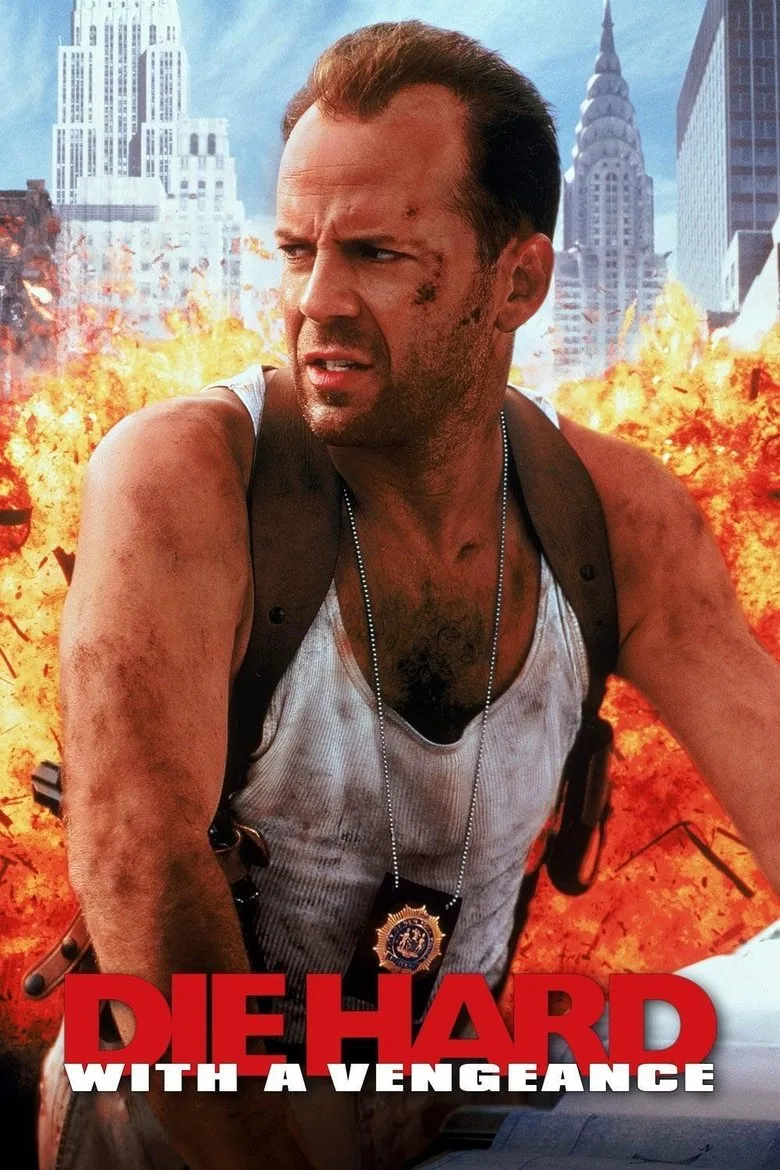
Die Hard: With a Vengeance is the third installment in the famous Die Hard franchise, released in 1995 and directed by John McTiernan — the same director who launched the first film back in 1988. Bruce Willis returns to his iconic role as Detective John McClane, but this time outside of enclosed buildings and right in the heart of a bustling New York City. Samuel L. Jackson joins him as Zeus Carver, an unlikely partner who brings a distinct energy to the dramatic duo. The villain Simon Gruber is played by Jeremy Irons, who portrays an adversary carrying a personal agenda and an extraordinarily complex criminal scheme. The film holds a rating of 7.279 out of 10, a number that reflects broad audience acceptance without quite reaching the critical acclaim that accompanied the first installment. ---Who Is This Film For?
This film is designed primarily for fans of traditional action movies that rely on a fast pace and relentless chase sequences. If you enjoy watching two contrasting characters forced to work together under pressure, you will find plenty to satisfy you here. The film is also well-suited for those who are nostalgic for the 1990s style of building suspense — an era when films trusted the audience's intelligence without drowning them in excessive visual effects. On the other hand, if you are looking for dramatic depth or a complex psychological plot, this is not the right film for you. And if you have seen the previous two installments and enjoyed their style, you will adapt to this chapter with ease, even though it differs from them in spirit and geography. ---Strengths
First: The Chemistry Between Bruce Willis and Samuel L. Jackson This duo is undeniably the backbone of the film. The subtle tension and mutual sarcasm between the two characters give the film a comedic breath that doesn't weigh down the action but rather balances it. Jackson delivers a character who is an ordinary citizen forced into an adventure far beyond his usual scope, and this contrast with the weary, seasoned McClane produces dialogue scenes well worth watching. Second: Expanding the Geographic Space One of the film's boldest decisions is moving out of an enclosed space and into the open streets of New York City. Instead of a building or an airport, the entire city becomes the arena for the operation, giving the film a sense of extended danger and an inability to predict where the next threat will emerge. Third: Jeremy Irons as an Intelligent Villain Irons does not play a villain who shouts and threatens — he embodies a cold-blooded man who pulls his strings from a distance and has understandable motivations, even if they are criminal. This type of villain is harder to confront because he does not act impulsively, which makes every confrontation with the hero all the more tense. Fourth: A Pace That Never Stops The film possesses a narrative momentum that is rare in action films. The sequential riddles that Simon presents to McClane keep the viewer in a constant state of anticipation, making each scene feel as though it adds a new piece to the larger picture. This quasi-game structure sets the film apart from many routine action films. ---Weaknesses
First: The Decline of the Personal Element What gave the first installment its emotional power was that McClane was trying to save his wife — meaning the fight had an intimate, personal dimension. In this chapter, Simon's personal motive exists but remains in the background for most of the runtime, and the film frequently turns into little more than a race to arrive before disaster strikes, which is a less emotionally impactful driver. Second: Some Riddles Feel Forced The riddle game that Simon imposes on McClane is enjoyable on the whole, but some of its solutions feel contrived or rely on unconvincing coincidences. This repeatedly breaks the internal logical flow of the film and may frustrate viewers who think out loud alongside the events on screen. Third: The Ending Suffers from Hazy Execution The conclusion that determines Simon's fate arrives somewhat hastily compared to the momentum the film had built over two hours. The final resolution feels less satisfying than the complexity that preceded it deserves, as though the screenplay was running out of ideas at the most critical moment. Fourth: The Female Role Is Marginal The character played by Colleen Camp feels added without genuinely contributing to the narrative structure, representing an imbalance in the distribution of roles that could have easily been addressed at the writing stage. ---Final Verdict
Die Hard: With a Vengeance is an action film built with evident craftsmanship that performs its function with great efficiency. It will not change the way you see cinema, nor will it add anything of great weight to your cinematic palate, but it does deliver two hours of relentless suspense built on an engaging human duo, an intelligent villain, and a pace that refuses to slow down. Its rating of 7.279 out of 10 is entirely fair. It is considerably better than the second installment and less deep than the first — a comfortable position that makes it one of the most re-watchable action films of the 1990s without any sense of boredom. If you are looking for a film that engages your mind just enough to keep you attentive without exhausting you intellectually, this is the right choice for your evening.📝 This article is an editorial piece based on publicly available information about the film. The author's opinions do not necessarily represent the platform's position, and some details may differ from official sources.