

The Correct Order to Watch Spider-Man 2 — A Complete Guide
Do You Need a Specific Order?
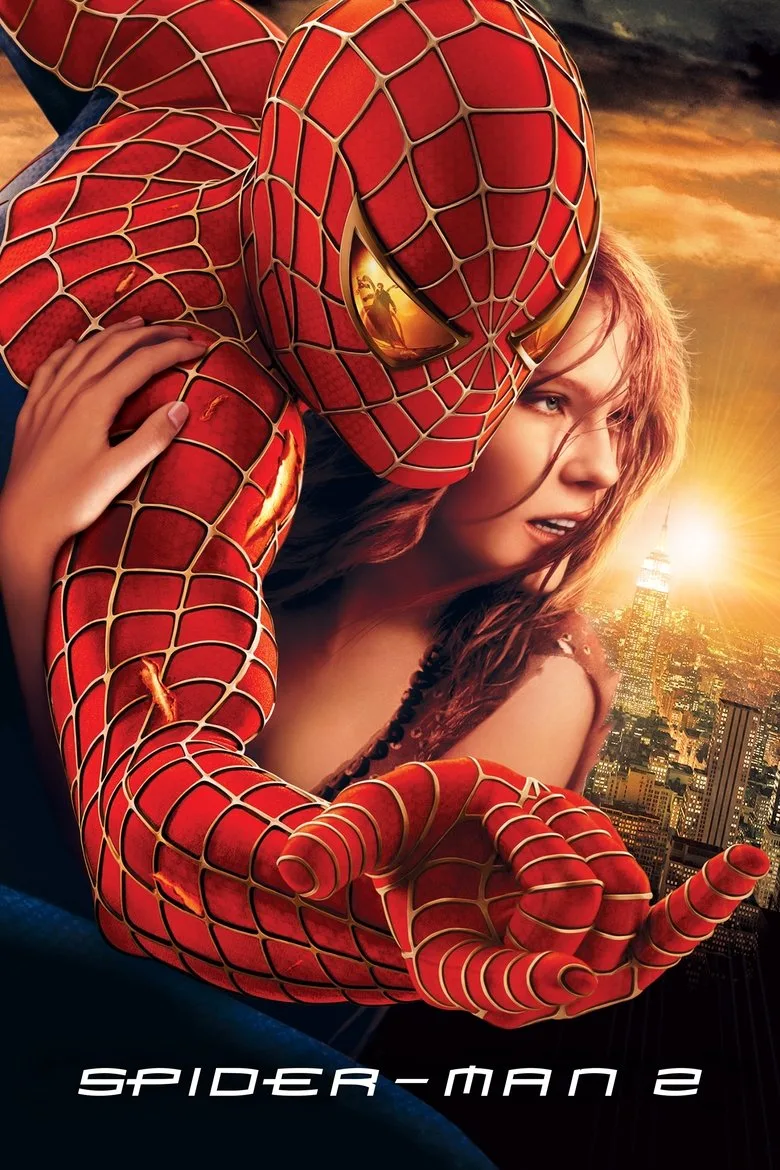
Spider-Man 2, released in 2004 and directed by Sam Raimi, is the second installment in a classic trilogy widely regarded as one of the most significant contributions American cinema made to the superhero genre during the first decade of the new millennium. The film is not a fully standalone work — it builds directly on the foundation laid by the first installment in 2002 and leaves clear threads that set the stage for the third in 2007. For this reason, following a logical viewing order is not merely a suggestion; it is a necessity for grasping the relationships and motivations that drive the film's characters. In this chapter, Peter Parker is a man groaning under the weight of two irreconcilable responsibilities: his secret identity as Spider-Man and his crumbling human life. His studies falter, his relationships erode, and his love for Mary Jane Watson remains locked in silence. Meanwhile, scientist Otto Octavius emerges as a central figure whose failed scientific experiment becomes a catastrophe that gives birth to the villain Doctor Octopus. These dramatic layers cannot be fully appreciated without knowledge of what came before. ---Chronological Order
If you want to follow the story's timeline as events unfold within Sam Raimi's world, the order is as follows: 1. Spider-Man (2002) This is where the story begins from scratch. Peter Parker, the shy student bitten by a radioactive spider, discovers his abilities and faces his first confrontation with the villain Green Goblin — Norman Osborn, the father of his friend Harry. The film establishes the core characters: Peter, Mary Jane, Harry, Aunt May, and the world of New York that Peter protects from darkness. 2. Spider-Man 2 (2004) The film at the center of this discussion. Two years have passed since the events of the first installment. Peter struggles, temporarily gives up his mask, then returns stronger and with greater clarity about his sense of responsibility. The confrontation with Doctor Octopus forms a dramatic and visual climax that blends physical action with psychological conflict. 3. Spider-Man 3 (2007) This film closes out the trilogy, expanding the cast of characters and introducing the black suit and the character of Venom. It is considered the weakest of the three, yet it carries the resolution of threads opened in the previous two films — particularly those concerning Harry Osborn and his relationship with Peter. ---Release Order
In this case, the chronological order aligns perfectly with the release order, which makes things considerably easier for the viewer:| Order | Title | Release Year |
|---|---|---|
| 1 | Spider-Man | 2002 |
| 2 | Spider-Man 2 | 2004 |
| 3 | Spider-Man 3 | 2007 |
Where to Start for Newcomers?
If you are new to the world of Spider-Man on film and are not sure where to begin, the answer is straightforward: start with the first film from 2002. The first film is not merely a technical introduction to the character — it is a film that familiarizes you with Peter's relationship with his Uncle Ben, which forms the moral backbone of everything he does afterward, and introduces you to the character of Harry Osborn, whose arc gradually shifts from friendship to long-running enmity. Jumping straight into the second film may confuse viewers trying to understand why Peter is in such psychological turmoil, or why Harry regards him with eyes full of suspicion and resentment. That dramatic backstory comes exclusively from the first film. For seasoned viewers who have already seen the first film, jumping directly into Spider-Man 2 is perfectly fine, as the film provides a light narrative recap in its opening minutes through scenes that evoke prior events. ---Viewing Tips
First: Do not compare Raimi's trilogy to what came after it Many viewers today approach this trilogy having already watched The Amazing Spider-Man series or the MCU series. That prior exposure can distort the experience. Raimi's trilogy operates on its own logic and its own tone — it leans more toward personal drama and human emotion than toward pure spectacle-driven excitement. Second: Pay attention to the scenes of internal transition Spider-Man 2 revolves around a simple philosophical question: is it acceptable for a person to abandon their role when it becomes too much to bear? The scenes that appear "slow" or unnecessary are in fact the heart of the film. Skipping past them means missing its deeper layer entirely. Third: The film is suitable for family viewing Unlike many superhero films that lean toward intense visual violence, this film maintains a balance that makes it appropriate for a wide range of ages, while still offering content that speaks to the mature viewer on a dramatic level. Fourth: Works worth watching after the trilogy After finishing Raimi's trilogy, you can explore: - The Amazing Spider-Man (2012 and 2014): A fully independent relaunch starring Andrew Garfield, with a different tone and a greater inclination toward mystery and complexity. - Spider-Man: Homecoming (2017): The MCU version with Tom Holland, integrating the character into the broad expanded universe. - Spider-Man: Into the Spider-Verse (2018): An animated experience that engages with the concept of the multiverse with striking visual intelligence, and pays a clear tribute to the character's legacy across decades. - Spider-Man: No Way Home (2021): Brings all three versions together in a meeting well worth watching, though fully enjoying it requires familiarity with the previous trilogies. Fifth: The value of rewatching Spider-Man 2 is one of those films that reveals additional details on a second viewing. Octavius's dialogue with Peter about science and responsibility takes on a different meaning once you know where his path leads. The scenes featuring Aunt May reveal a depth in the writing of her character that is not immediately apparent on first watch. --- On the whole, Spider-Man 2 is not merely a sequel to a prior film — it is the gravitational center of the entire trilogy. The first film plants the seed, the third harvests some of its fruit, but the second is where the tree grows and its roots take hold. Watching it in isolation strips away part of its value, yet it remains a reasonably self-contained experience for anyone who wishes to enter it directly.📝 This article is an editorial piece based on publicly available information about the film. The author's opinions do not necessarily represent the platform's position, and certain details may differ from official sources.