

Do You Need a Specific Order?
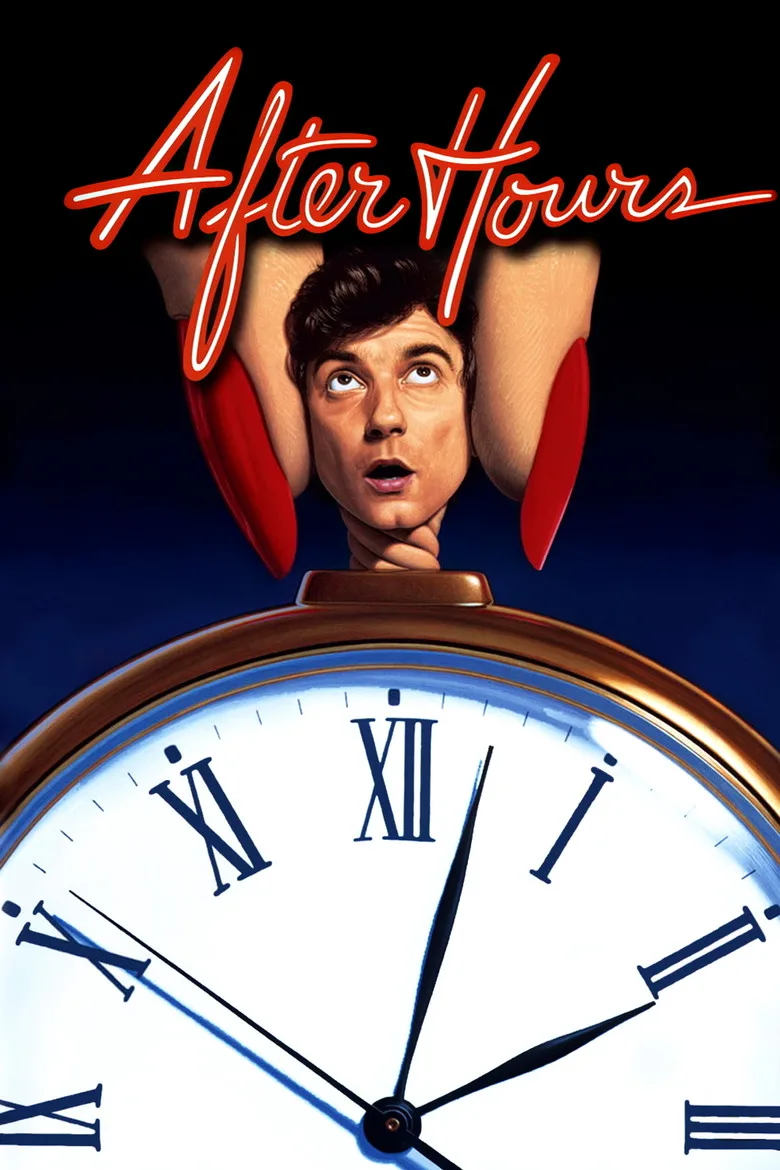
After Hours is a thoroughly independent film directed by Martin Scorsese in 1985, and it does not belong to any franchise, series, or expanded cinematic universe. There is no sequel, no spin-off series, and no shared universe that requires you to follow a specific viewing order before sitting down to watch it. This means you are completely free to watch it whenever you like, with no concern that you'll miss essential backstory or prior events. That said, this freedom doesn't mean the film exists in a cultural or artistic vacuum. It belongs to a specific era of American independent cinema, and to Scorsese's signature style — one that blends tension with dark humor and feverish nocturnal imagery. Understanding the context in which it was born, therefore, gives you a deeper and more rewarding viewing experience. ---Chronological Order
Since After Hours is not part of a series, there is no internal chronological order linking it to other works. The story is entirely self-contained: a office worker named Paul Hackett leaves his Upper Manhattan apartment late at night in pursuit of a woman he met at a café, and his journey turns into a single night of cascading nightmares and uncomfortably comic situations. Everything begins and ends within that one night. If you want to build a "timeline" of Scorsese's own work, this film arrived at a transitional moment in his career — after films such as Mean Streets (1973), Taxi Driver (1976), and New York, New York (1977), and before he moved toward the larger, more ambitious productions of the late eighties and nineties. Its place in his filmography is that of a bold, experimental moment that reveals a different side of the director's personality. ---Release Order
There is no multi-part release order for this film. It premiered at the Cannes Film Festival in 1985, where Scorsese won the Best Director award, and was then released to American audiences in October of that same year. No official extended cuts or sequels have ever been produced. If we want to speak of "order" in a broader sense — that is, how you can build a complete viewing experience around it — the suggested approach is:- Before watching: Familiarize yourself with 1980s New York through brief documentary or photographic material. Much of the film's magic is tied to the atmosphere of Lower Manhattan at that time.
- The film itself: It runs approximately 97 minutes, and watching it at night is recommended so that you align with its temporal rhythm.
- After watching: You can seek out Scorsese interviews in which he specifically discusses his approach on this film.
Where to Start for Newcomers
If you are a first-time viewer looking to enter the world of this film with no prior background, the good news is that you don't need anything at all. The film introduces itself within its opening minutes and assumes you have seen nothing before it. The film is well suited for those who enjoy:- Nocturnal and surreal cinema: If you enjoy films whose events unfold over a single chaotic night.
- Dark comedy: Where unsettling events are presented with a sardonic edge, without the film losing its sense of tension.
- Scorsese's experimental work: Far removed from the major crime films for which he is best known.
Similar Works Worth Watching Afterward
Since the film is standalone with no sequels, the best thing you can do is explore works that share its spirit and style. These are not continuations or follow-ups, but they enrich your experience and deepen your understanding of the genre it belongs to:- Blue Velvet (1986) by David Lynch: A film that shares After Hours' dark aesthetics and its probing beneath the glossy surface of American life.
- Something Wild (1986) by Jonathan Demme: A wild nocturnal road trip blending comedy and tension in a way that summons the very same spirit as this film.
- Into the Night (1985) by John Landis: A man who finds himself in situations beyond his control over the course of a single night, with a mix of suspense and comedy.
- The Night of the Hunter (1955): For those interested in the roots of early American nocturnal cinema.
- Taxi Driver (1976) by Scorsese himself: Not because it is connected in plot, but because nocturnal New York as a space of anxiety and isolation appears in its most vivid form in both films.
Viewing Tips
The ideal time: Watch it late at night. This is not a trivial aesthetic detail — the film was built on the rhythm and distinct logic of the night, and you will feel a genuine difference in the experience. The right mindset: Don't expect a conventional thriller built toward a specific outcome or a triumphant hero. The tension here comes from the accumulation of small situations rather than one central dramatic event. The film has a deliberately winding rhythm, and the more you let yourself go along with it without preset expectations, the more you will enjoy it. Ratings and expectations: The film carries a rating of 7.498 out of 10, which reflects the respect critics and audiences hold for it — but it is not a classic crowd-pleaser in the traditional sense. Some viewers find it funny and clever; others find it frustrating. That divide is part of its identity. Language and subtitles: If you are watching it with subtitles, be aware that much of the comedy relies on American vernacular and the rapid rhythm of the dialogue, so a good translation makes a real difference. Don't search for a hidden deeper meaning: The film is most powerful when you accept it as a complete emotional experience rather than a philosophical puzzle in need of solving. Its message — if we were to summarize it — sits on the surface rather than buried in the depths: escaping routine is not always what you imagine it will be. --- After Hours remains one of Scorsese's most personal and boldly experimental films, even if it stands at the margins of his broader body of work. Watching it requires no prior preparation and no specific order, but it does require an openness to cinema that refuses to move in straight lines.📝 This article is an editorial piece based on publicly available information about the film. The author's opinions do not necessarily represent the platform's position, and some details may differ from official sources.