

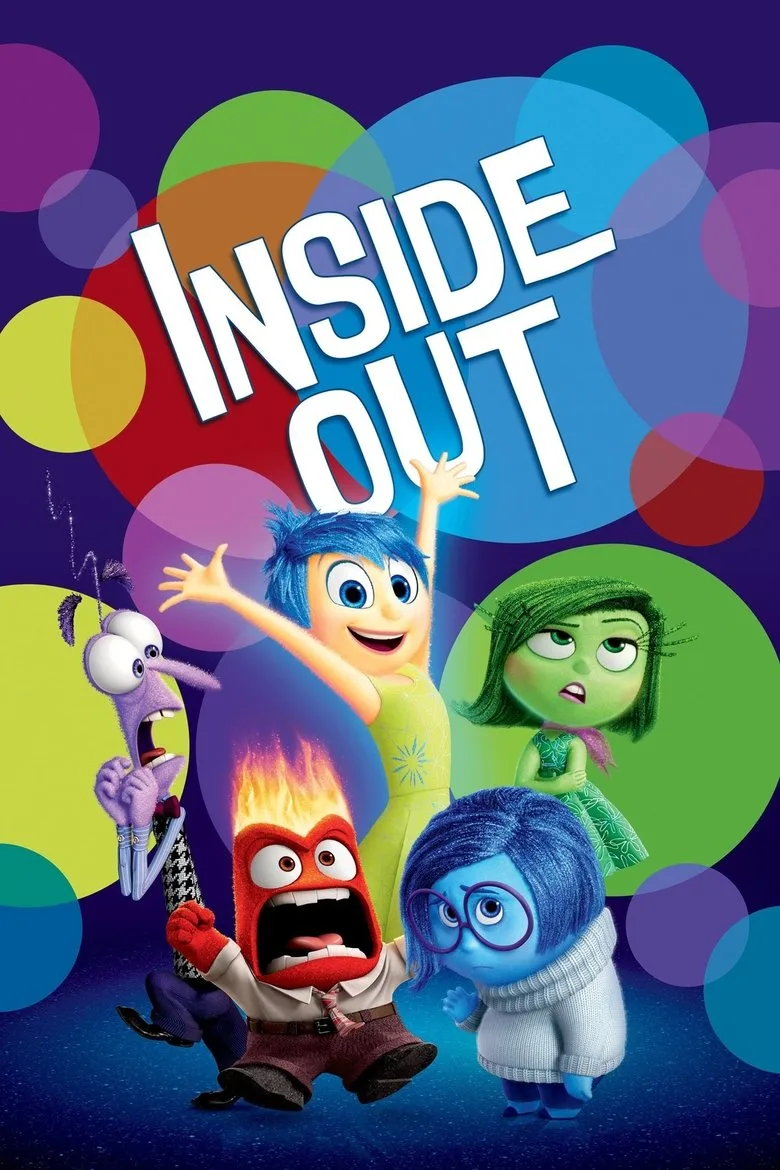
Film Introduction
The film Inside Out produced by Pixar Studios in 2015 presents a unique perspective on the psychological life of humans through the eyes of a young girl named Riley. The film takes us inside the mind of this little girl where five main emotions live in a small control headquarters: Joy, Sadness, Anger, Fear, and Disgust. The film uses this creative concept to explore how a major life transition affects a child's life, and how different emotions work together to shape our personalities and experiences in life. This film combines clever humor with emotional depth, making it a cinematic experience that appeals to both children and adults alike.
Film Events
The Beginning in Minnesota
The film's events begin in Minnesota where Riley lives her quiet and happy life with her family. In Riley's mind headquarters, Joy leads the control room, a character representing happiness and optimism. Joy manages the control panel with her team of other emotions, each with their role in Riley's life. These opening scenes show how emotions work in harmony to guide the child's actions and shape her memories.
Moving to San Francisco
Everything changes when Riley's parents decide to move to San Francisco. This major change in her life causes chaos in the control headquarters. Joy tries to maintain control and positivity, but the other emotions begin to emerge more powerfully. Sadness, whose role had been secondary until now, begins to increasingly affect Riley's condition. In Joy's attempt to prevent Sadness from taking over the situation, an accident occurs that causes Riley to lose her core memories—the fundamental memories that form her personality and core identity.
The Journey Through the Mind
After losing the core memories, Joy and Sadness find themselves trapped deep in Riley's mind, far from the control headquarters. The real adventure begins here as these two characters are forced to travel through different regions of the mind to recover the core memories. The journey passes through several colorful and imaginative areas, including Personality Island and Long-Term Memory. During this journey, they meet a character called Bing Bong, Riley's old imaginary friend from childhood.
Discoveries Along the Way
During their journey, Joy and Sadness discover that Sadness is not an enemy but an essential part of the human experience. When Riley truly needs Sadness, it comes to help her process the major changes in her life. Bing Bong, though a sad and awkward character, plays an important role in reminding them of the importance of the past and childhood. Ultimately, Bing Bong must sacrifice himself to save Joy and Sadness, an emotional scene that affirms the value of memories and relationships even as they fade with time.
Standout Scenes
The Scene of the Last Core Memory
One of the most powerful scenes in the film is when Sadness and Joy return to the control headquarters and help Riley remember a happy moment from her childhood. In this scene, we realize that some memories can be both sad and happy at the same time. This reflects the real reality of our lives where there are no pure emotions but rather a complex mix of feelings.
The Scene of Bing Bong's Disappearance
Bing Bong's death scene is considered a pivotal moment in the film. When Bing Bong slips into the chasm of forgetting while helping Joy and Sadness reach the control headquarters, we witness the loss of childhood innocence. This scene touches on a deep subject: how a part of our childhood disappears as we grow, and that this is a natural part of maturation.
The Scene of Riley in Her New Room
The film ends with a quiet scene where Riley sits in her new room in San Francisco and begins to cry. Instead of Joy trying to prevent Sadness, she allows Sadness to take its place on the control panel. This shift in dynamics represents an important turning point in our understanding of how human emotions function in balance.
Message and Meaning
Accepting All Emotions
The film's core message is that all emotions, including sadness, fear, and anger, have an important role in our lives. We cannot be happy all the time, and it is not healthy to try. The film teaches us that growth and maturation means accepting a full range of emotions, and understanding when and how to express each one.
The Importance of Change and Adaptation
The film addresses change as a natural part of life. Moving from one city to another is not a disaster, but rather an opportunity for growth, learning, and development. The film encourages children and adults to embrace changes even when they are scary or sad.
Growing Up Means Losing Innocence
Bing Bong's departure symbolizes the loss of childhood innocence. As we grow older, we lose some of the magic and imagination we had as children. But the film suggests that this is not entirely a bad thing; rather, it allows us to develop a deeper understanding and emotional maturity.
The Power of Human Relationships
Through the journey of Joy, Sadness, and Bing Bong, the film emphasizes the importance of relationships in our lives. Relationships with friends and family are what truly shape our identity. When Riley struggles in her new city, what truly helps her is a genuine moment with her parents where she shares her real feelings instead of hiding her sadness.
Balance and Integration
Ultimately, the film presents a balanced view of psychological life. One emotion does not dominate; rather, Joy, Sadness, Fear, Anger, and Disgust all work together in harmony to guide our lives. This balance is what allows us to live in a healthy and complete way.
📝 This article is an editorial piece built on publicly available information about the film. The author's opinions do not necessarily represent the platform's position, and details may differ from official sources.