

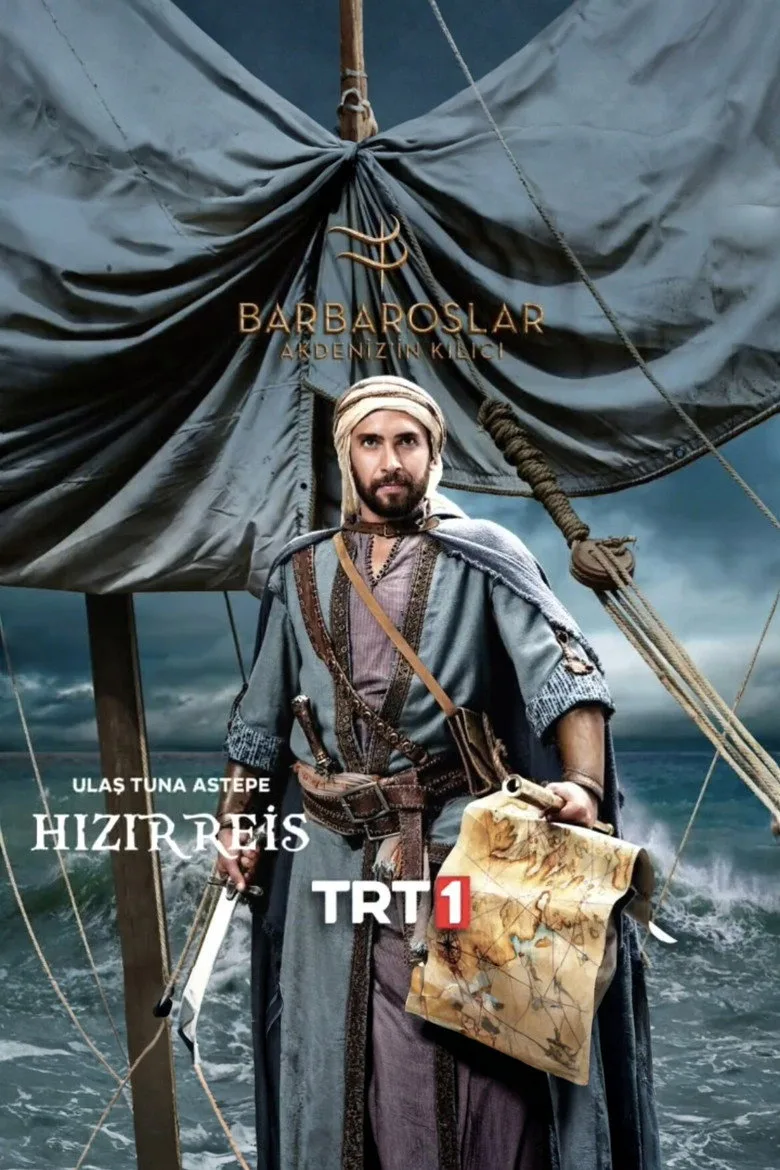
Standout Scenes from Barbaroslar 2021
From the very first moment you watch Barbaroslar, you realize you are in the presence of a Turkish drama that takes maritime history with rare seriousness on the small screen. The series "Barbaroslar: Sword of the Mediterranean," released in 2021, tells the story of four brothers who carved their names into the memory of the Mediterranean, transforming from simple merchants into naval commanders who shifted the balance of power across the region. Throughout its episodes, the series delivers a number of scenes that deserve to be paused upon and contemplated for their dramatic construction, emotional impact, and visual power. In this article, we highlight five of the most prominent scenes that left a clear mark on the hearts of viewers. ---1. The Transformation Scene: From Merchant to Naval Commander
This scene represents the true turning point in the journey of the four brothers, and most notably Khair al-Din. In it, Khair al-Din faces an existential choice between withdrawing from battle to save his own life, or standing firm and defending what he believes in. What preserves the scene's dramatic weight is not the action or the noise, but that brief silence before the decision — when Khair al-Din gazes at the sea as though seeking its permission before announcing the birth of a new commander. The director uses a close-up shot on his eyes with great skill, leaving the score to convey what words cannot. It is the scene that convinces you this man did not choose the sea — rather, the sea chose him. ---2. The Confrontation Scene with Vargas de España
One of the most tension-filled scenes throughout the entire series is the cold face-off between Khair al-Din and his bitter adversary arriving from the corridors of the Vatican. What distinguishes this scene is that it does not rely on swords or cannons, but on carefully measured words and glances charged simultaneously with hatred and mutual respect. Both characters know that the war between them runs deeper than a mere dispute over the seas — it is a clash of identity, belief, and the right to exist. The dialogue writing in this particular scene elevates the series a notch, because it grants the enemy depth rather than presenting him as a one-dimensional villain, and that is precisely what makes the confrontation more authentic and more powerful. ---3. Aruj's Farewell Scene at Sea
It is difficult to discuss the series without referring to the farewell scene the brothers live through in the aftermath of one of the major battles. The scene brings together deep personal grief and the larger meaning of sacrifice. When a companion is cast into the open sea, no grand funeral is held for him, and the battle does not stop on his behalf — everything continues, and life moves on despite the wound. This dramatic choice embodies the philosophy of the entire series: that loss is an undeniable part of war, and that commanders carry the weight of their losses in silence. The acting in this scene avoids the emotional excess typical of Turkish productions and opts instead for the restrained tear and the brief word — a highly successful directorial decision. ---4. The Great Naval Battle Scene and the Encirclement Tactic
Technically, this is the most complex scene in the entire series. When Khair al-Din decides to use the encirclement tactic to surround the European fleet, the screen transforms into a moving war map that blends military planning with field execution. The scene stretches over several long minutes in which commands, responses, and the synchronized movement of ships all interweave, yet the tight editing prevents it from descending into visual chaos. What further adds to the scene's value is that victory does not come from numerical superiority, but from advance thinking and a deep understanding of the enemy. The message is implicit but clear: the mind is the primary weapon, before the cannon and the sword. ---5. The Sacred Secret Scene and the Revelation That Changes Everything
Roughly midway through the series, viewers find themselves confronted with a scene that reshapes everything that came before it. The revelation of the nature of the secret the brothers carry, and its connection to the Ottoman Empire, transforms the story from a maritime adventure into a historical trust. The scene is intelligently constructed in layers: what is said explicitly, what is hinted at, and what is left for the viewer to complete with their own imagination. The dim lighting and slow shots lend the scene an air of solemnity and reverence, as though the camera itself is aware of the weight of the moment. This particular scene is precisely what drives many viewers to rewatch the earlier episodes with different eyes, searching for the clues that were always there. ---Conclusion
Barbaroslar is not merely a series about battles and ships. It is a work that harnesses maritime history to construct a complete dramatic edifice of loyalty, betrayal, faith, and doubt. The five scenes mentioned above represent, in my view as a film critic, the backbone that bears the weight of the entire story. Each one poses a question deeper than any answer it provides, and that is the hallmark of mature dramatic writing — writing that respects its viewers' intelligence and invites them to participate in the making of meaning, rather than simply receiving it.📝 This article is an editorial piece based on publicly available information about the show. The author's opinions do not necessarily represent the platform's position, and details may differ from official sources.