

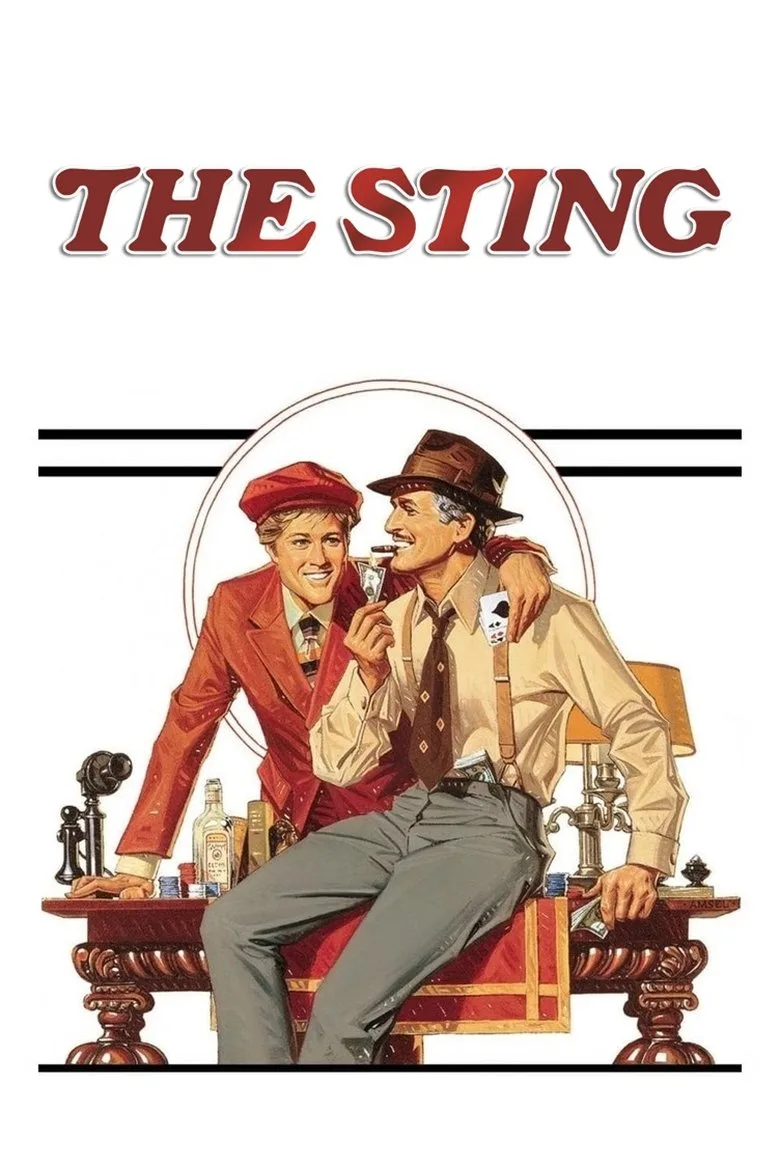
Review of The Sting (1973) - The Big Con
The Sting is considered one of the most important films presented in the 1970s, a work that combines elements of crime and comedy in a balanced and intelligent manner. The film presents us with a complex con story set in the world of organized crime during America's Great Depression, and proves that cinema is capable of delivering high-quality entertainment without relying on excessive violence or visual effects.
The Story and Narrative Structure
The film's events revolve around the meeting of a small-time con artist named Johnny Hooker with a veteran mobster known as Henry Gondorff. Everything begins when their friend is killed by a ruthless and greedy crime boss, igniting in them a desire for revenge. But instead of resorting to direct violence, they decide to take revenge through a skillfully executed and comprehensive con scheme.
The narrative structure of the film deserves praise because it is complex without being confusing. The screenplay moves smoothly between different layers of the plan, presenting us with details of the con gradually while maintaining suspense. There are repeated twists that make the viewer reassess what they have just watched, reflecting the brilliance of screenwriter David Ward in handling complex material with high craftsmanship.
What distinguishes the story is that it does not rely on luck and coincidence, but rather on meticulous planning and skilled execution. Every element in the plan has its place and role, and every minor character in the film has a reason for existing. This type of narrative construction significantly elevates the film's quality and makes it rewatchable.
Acting Performance and Chemistry Between Actors
The film stars two of Hollywood's most charismatic actors: Paul Newman and Robert Redford. The key point here is that the chemistry between the actors works very effectively. The duo succeeds in displaying the relationship between the two characters—the dynamic of mentor and apprentice, and its evolution into a relationship based on equality and mutual respect.
Paul Newman presents the character of Henry Gondorff with confidence and professionalism, efficiently portraying a retired mobster who possesses decades of experience. His performance is marked by calm and control, and he masters the art of subtle acting that doesn't require exaggerated movements. Robert Redford, for his part, embodies Johnny Hooker with an energy and enthusiasm befitting an ambitious young man seeking to prove himself, while avoiding the trap of superficial acting.
The film features a number of talented supporting actors such as Robert Shaw and Robert Earl Jones, who contribute to creating a living and convincing world. The interaction among all the actors displays a high level of professionalism and good preparation.
Direction and Cinematography
Behind the camera stands George Roy Hill, a director who possesses a clear vision of the story he wants to tell. The choice of time period—the 1930s—is not merely decoration but influences every aspect of the film from costumes to colors, music, and lighting. Attention to detail is evident in every shot, from set design to the selection of props and furniture.
The cinematography was handled by David S. Hall, who presents beautiful and evocative images of the city during the Depression. The warm colors and soft lighting create an atmosphere that contains both nostalgia and melancholy at once. There is also intelligent use of interior and exterior spaces that contributes to telling the story in an effective visual manner.
From a technical standpoint, the editing is smooth and dynamic, and the cutting serves the narrative without becoming dominant. The film does not rely on sophisticated effects but rather on the mastery of traditional artistic craft, which allows it to maintain its quality over time.
Music and Other Artistic Elements
The use of the famous conductive music in the film deserves special mention. Ragtime music—especially "The Entertainer" by Scott Joplin—becomes the musical signature of the film. This choice is not random but deepens the feeling of a specific time period and adds a layer of lightness and irony to the serious events.
The film's sound design is also effective, contributing to building tension and excitement without relying on exaggerated sounds. The dialogue is clear and intelligent, carrying a great deal of clever irony that emerges naturally from the situations rather than being merely imposed jokes.
Strengths
1. Intelligent and Complex Screenplay: The film proves that a good screenplay can be more entertaining than chases and explosions. Every line of dialogue has a purpose, and every scene adds to the overall structure.
2. Balanced Pacing: The film moves at a pace that allows the viewer to breathe and absorb information. There is no tedium despite the fact that most scenes contain more dialogue than action.
3. Charisma and Characters: The two leads portray unforgettable characters, and the relationship between them feels genuine and naturally developed.
4. Production and Design: Everything in the film looks convincing and authentic. There are no moments where the mask of production slips away.
Weaknesses and Critical Observations
1. Lack of Psychological Depth: While the story works as a clever game, it does not delve deeply into the profound psychological motivations of the characters. Some viewers may desire a better understanding of what drives these people to risk their lives in this manner.
2. Female Characters: The film reflects its era regarding the diminishment of women's roles. Female characters exist primarily to serve the main story and not as truly active participants.
3. The Final Resolution: While the film's ending is clever, an argument can be made that some of the final twists may make viewers feel the story is unnecessarily complex.
Comparison Within the Cinematic Context
In the context of 1970s cinema, The Sting stands out as a distinguished work because it proves that intelligent entertainment can attract a broad audience without sacrificing artistic quality. The film's one hundred thirty-one minutes pass quickly, which testifies to the director's and editor's mastery in controlling pacing.
The film won numerous awards including Academy Awards, reflecting widespread recognition of its artistic value. But the true value lies in its being a film that can be rewatched repeatedly without losing its luster.
Final Assessment
The Sting deserves a rating of 8.0 out of 10. It is a professional film that delivers intelligent entertainment and high cinematic craft. It combines narrative intelligence with strong acting performances and precise direction. The film is not without flaws—some viewers may feel it lacks deeper emotional depth—but as an entertainment film that respects the intelligence of its audience, it achieves what it aspires to.
If you are looking for a film that combines excitement, intelligence, and good artistic craftsmanship, The Sting deserves your time. It proves that the best films are not always those that rely on explosions and chases, but those that rely on intelligent writing and professional execution.
📝 This article is editorial content based on publicly available information about the film. The writer's opinions do not necessarily represent the platform's position, and details may differ from official sources.