

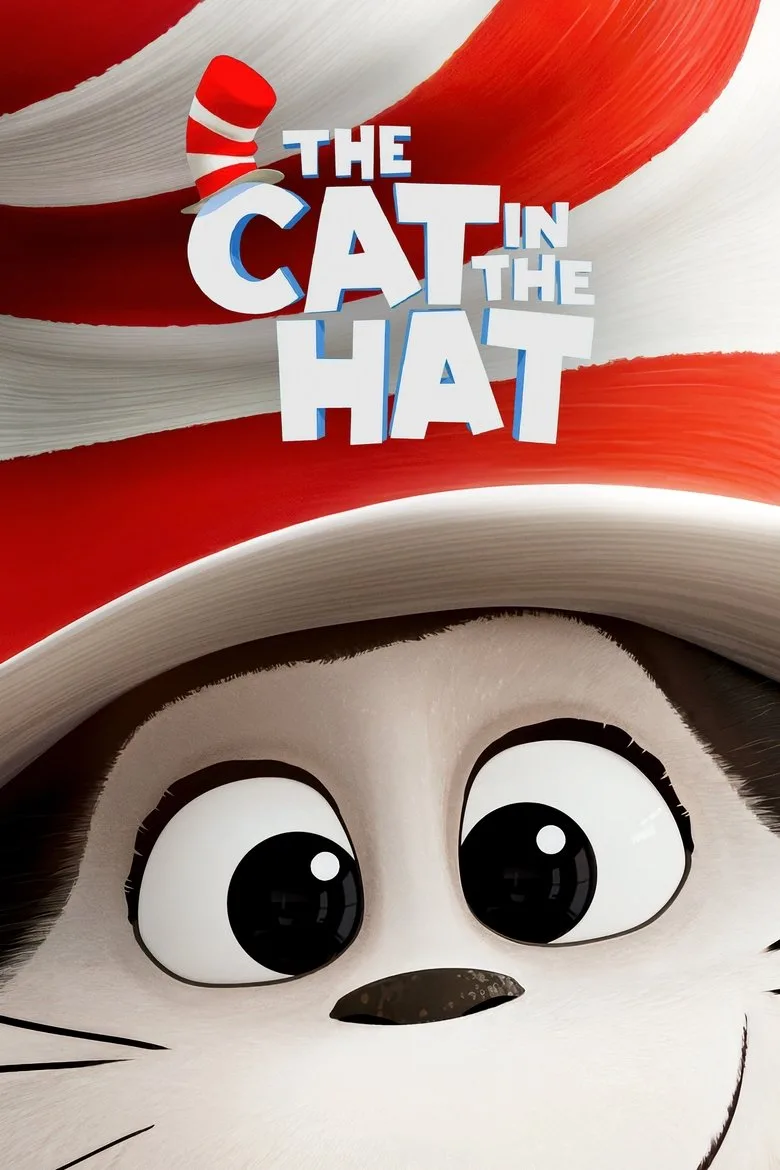
Review of The Cat in the Hat 2026
The Cat in the Hat returns to screens once again in a new animated version that presents a different vision from the classic literary original by renowned American author Dr. Seuss. This new attempt comes after previous cinematic efforts with varying degrees of success, but this time it adopts animation techniques instead of live-action. The question that inevitably arises: will this version succeed in restoring the magic to a classic story known by successive generations?
Film Story and Narrative Context
The film presents a well-crafted story revolving around two children, Gabby and Sebastian, who face psychological difficulties due to their move to a new city. This narrative framework is not entirely new, but it attempts to add an emotional dimension to the original story, which primarily focused on creative chaos and innocent fun.
The appearance of the Cat in the Hat, who introduces himself as a specialized agent from the "Institute of Imagination and Inspiration," brings with it an intriguing concept. Rather than being merely a mischievous visitor, he has become a character with a clear mission and professional responsibilities. This development gives the film a more cohesive narrative structure and a story with greater depth than merely a series of comedic incidents.
However, the problem lies in the execution. The story attempts to balance several elements: an emotional lesson for children, a fantastical adventure, and an existential crisis for the main character (the Cat). This fragmentation of narrative goals leaves an impression of disconnectedness, where you feel that each part of the film seeks to achieve a different objective without true integration between them.
Voice Acting and Audio Aspects
In an animated film, success depends greatly on the quality of voice performances and the ability to create living characters through voice alone. Unfortunately, the film does not appear to have succeeded in this aspect in any memorable way.
The voice actors, while they may be professionals, do not deliver outstanding performances that leave a lasting impression. The dialogue often feels stiff, and the attempt to inject humor into the script frequently produces counterproductive results. The difference between genuine humor and artificial sarcasm is evident here, and the film leans heavily toward the latter.
The Cat's voice, which should be a source of charm and appeal, lacks the charisma that distinguishes the character in previous iterations. There are no vocal layers that reflect the complexity of the character as an agent anxious about his professional future.
Direction and Cinematography
The film's animation has undeniable high technical quality. The colors are vibrant, the details are precise, and the fantasy world that the film transports us to enjoys a reasonable degree of visual beauty. The artistic design of the Cat itself maintains the iconic design from the original book while making modern attempts to make him appear more lively.
However, the direction—the most crucial element—fails to transform this visual quality into a cohesive cinematic experience. The pacing is unbalanced—some scenes move far too quickly, while others drag on without clear reason. The transitions between scenes lack fluidity, and the film's comedic rhythm is undisciplined.
The director appears to have tried to do too much at once, without focusing on what really matters: creating a genuine emotional and entertaining experience for viewers.
Strengths and Weaknesses
Strengths:
- Visual Design: The use of colors and artistic design reflects an understanding of the aesthetics of the world of The Cat in the Hat.
- Narrative Attempt: Adding emotional depth to the story by addressing the topic of relocation and adjustment to a new environment is theoretically a sound idea.
- Runtime: The film doesn't appear tedious in terms of length—it doesn't exhaust the viewer's patience.
Weaknesses:
- Shallow Humor: Most comedy attempts feel artificial and directed at very young children without resonating with other age groups.
- Narrative Cohesion: The story feels like disconnected pieces rather than an integrated whole.
- Secondary Characters: Supporting characters (such as parents and other characters) lack depth and development.
- Direct Moral Lesson: The film attempts to impose moral lessons in a direct and naive way without allowing them to emerge naturally from the narrative.
- Overall Rating: The film lacks any factor that makes it distinctive or worthy of notice among other animated films.
Final Assessment
The Cat in the Hat (2026) is a middling attempt at transforming a classic story into a modern animated film. While it boasts respectable technical quality and a narrative idea that isn't entirely bad, it fails to deliver a satisfying cinematic experience in terms of humor, emotion, and overall entertainment.
The film is not so bad that it's unwatchable, but it is certainly not good enough to be a valuable addition to the original story. Very young children without high standards may enjoy it, but parents and older children will likely find themselves feeling bored and frustrated.
Ultimately, this is a forgettable film—not because it is catastrophically bad, but because it is far too ordinary in the world of contemporary animation. It leaves no lasting impression and offers nothing new worth remembering.
📝 This article is editorial content based on publicly available information about the film. The author's opinions do not necessarily represent the platform's position, and details may differ from official sources.