

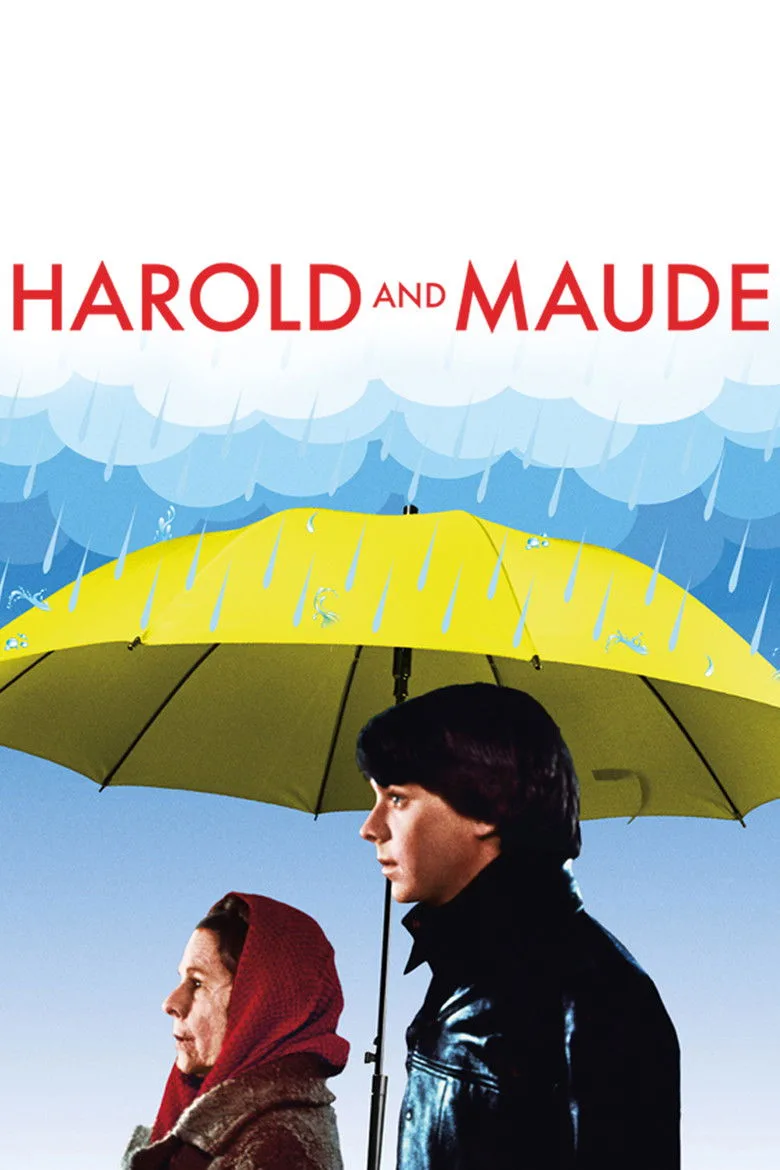
The American film Harold and Maude takes us back to the seventies, a period that witnessed unprecedented cinematic boldness in addressing traditional themes from different and daring angles. This work by director Hal Ashby presents us with a unique vision of love and life through an unexpected relationship between two completely contrasting characters.
The Story and Narrative Development
The film revolves around Harold (Bud Cort), a man in his thirties living a dark and bleak life. He always wears black, spends his time attending strange funerals, and attempts suicide in different and repeated ways as a kind of morbid game. His mother (Vivian Pickles), a wealthy and superficial woman, tries to force him into marriage and normal living, but Harold stubbornly refuses all her attempts.
At one of the funerals, Harold meets Maude (Ruth Gordon), a 79-year-old woman who shares his passion for attending the funerals of strangers. But the difference is that Maude possesses a lively spirit and a passion for living. Maude attends funerals not because she longs for death, but because she loves life in all its details. A strange journey of friendship begins that develops into a romantic relationship, and Maude becomes a kind of teacher to Harold, teaching him how to live instead of waiting for death.
The screenplay written by Colin Higgins relies on multiple layers of irony. Black comedy about death and suicide mingles with quiet romance and witty dialogues that reveal a different philosophy of life. The gradual development of the relationship between the two characters seems natural despite the improbability of the meeting itself, which reflects mastery in screenwriting.
Acting Performances
Bud Cort in the role of Harold delivers a reserved and quiet performance that suits a solitary and depressed young man. The actor uses facial expressions and slow movements to convey a complex psychological state, without resorting to exaggeration. Cort manages to make Harold's failed suicide attempts both funny and sad at the same time.
Ruth Gordon, for her part, steals the spotlight with her portrayal of Maude. The British actress presents a version of an elderly person who refuses to surrender to old age, a woman who loves life in all its forms and practices arts and music and drives a colorful car boldly. Her performance is characterized by vivacity and charm, and she manages to make Maude an inspiring character without seeming artificial or unrealistic.
The chemistry between the actors is genuine and convincing. You never feel that the large age gap spoils your belief in their relationship; rather, it becomes part of the beauty and depth of the story.
Direction, Cinematography, and Music
Hal Ashby chooses a contrasting visual style that reflects the psychological struggle of the characters. The muted colors in Harold's life contrast with the bright and vibrant colors in Maude's life. The cinematography by John A. Alonzo uses landscapes to enhance emotions, especially in quiet romantic scenes.
The original score by Cat Stevens plays a pivotal role in the film. The simple and meaningful songs become part of the story's development, not just a backdrop. The choice of Stevens' songs, particularly "Morning Has Broken" and "Where Do the Children Play?", deepens the film's philosophical message about life, death, and love.
The direction itself moves at a deliberately slow pace. There is no rush in the narrative, which allows the viewer to breathe and reflect on the meaning of events. Long scenes of silence and looks say more than dialogue.
Strengths
Originality: The film addresses the subject of love in a way that challenges the conventions of its time. A love story between a young man and an elderly woman was not a common subject in cinema, and the film treats it seriously without cheap mockery.
Intelligent Dialogue: The writing is characterized by intelligence and depth. The dialogues reveal the characters naturally, not through direct explanations.
Philosophical Message: The film conveys a powerful humanistic message about life, death, love, and personal choices, without becoming preachy or boring.
Dramatic Value: The film successfully balances black comedy and genuine drama, making the viewer laugh and feel sadness at the same time.
Weaknesses
Slow Pacing: Some scenes feel prolonged and may not suit the taste of contemporary viewers accustomed to faster pacing. The ending in particular may feel slow in a way that could cause the viewer to lose focus.
Weak Supporting Characters: Supporting characters such as Harold's mother and the characters who try to court him do not develop sufficiently. Sometimes you feel they are merely tools serving the main story.
Some Acting Performances: While the two main actors excel, some supporting actors deliver exaggerated or stereotypical performances.
Final Verdict
The film "Harold and Maude" represents an important moment in the history of American cinema. It is not a perfect film, but it is an honest, courageous, and authentic one. It deals with sensitive topics with sensitivity and presents real characters that speak to something deep in our humanity.
The rating of 7.6 out of 10 seems fair. The film is not for everyone—some will find its pacing slow and its message overly philosophical. But for those who can connect with it, they will find a cinematic experience saturated with meaning and feeling.
The film deserves to be watched, especially for lovers of classic cinema and those who seek different and unexpected love stories. It is a film that requires patience from the viewer, but it rewards that patience with a complete and valuable cinematic experience.
📝 This article is editorial content based on publicly available information about the film. The author's views do not necessarily represent the platform's position, and details may differ from official sources.