

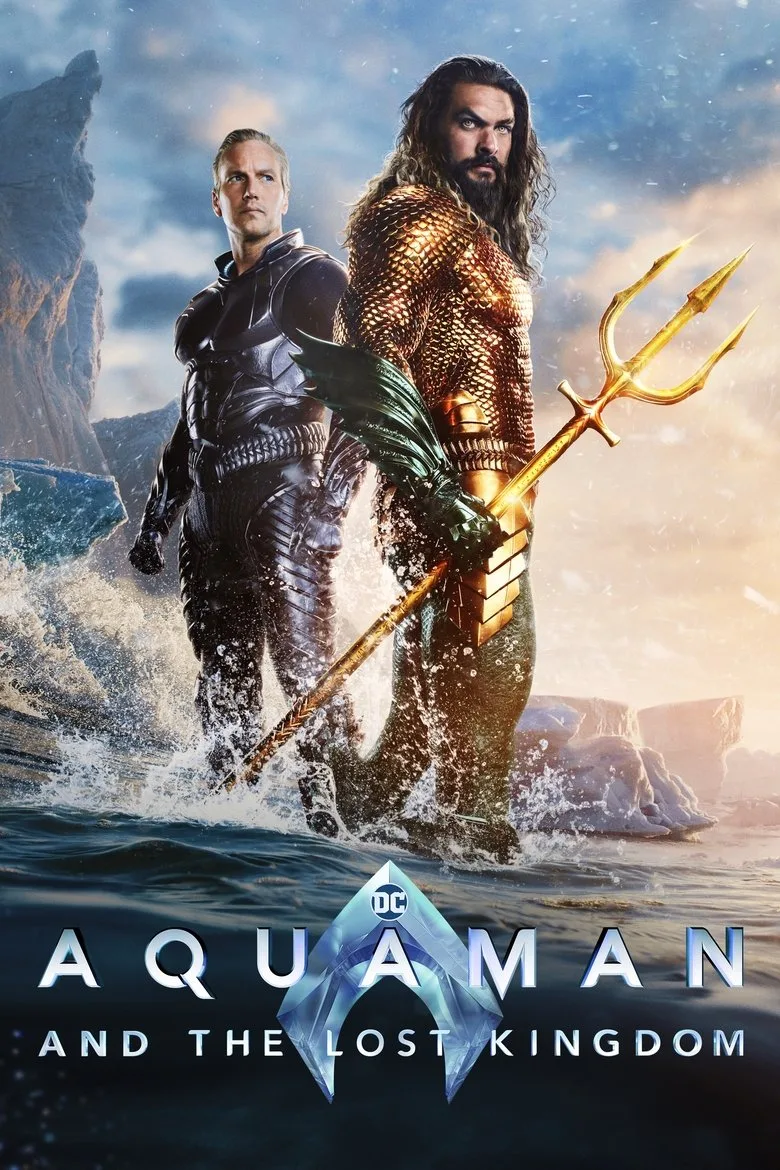
Aquaman and the Lost Kingdom returns to present the second chapter of the Atlantis king saga, carrying with it high expectations and significant commercial pressures. The film, which achieved an average rating of 6.524 out of 10, attempts to balance massive action with emotional storytelling, but it fails to achieve this balance completely. In this review, we will objectively examine what the film offered in terms of strengths and what challenges it encountered.
Film Story and Screenplay
The film's events revolve around the return of an ancient power from the ocean depths, where an enemy from the past emerges seeking revenge armed with extraordinary abilities. The screenplay attempts to build dramatic bridges between the past and the present, using family and trust as fundamental elements of the narrative.
The first problem lies in the development of the story itself. The film begins with a promising introduction, but the narrative loses momentum in the middle section, where the dialogue becomes repetitive and lacks the intelligent dialogue that distinguishes good cinema. The relationships between characters, including the reconciliation between the hero and former villains, are presented hastily without sufficient investment in the psychological foundation of these transformations.
In terms of narrative structure, the film suffers from artificial inflation of drama. Situations that are supposed to be pivotal are reduced to quick scenes, while action scenes are given considerably more time than their narrative necessity requires. This imbalance makes the emotional scenes appear rushed and insufficiently convincing.
Acting Performance
Jason Momoa returns to his role as Arthur Curry/Aquaman, delivering a consistent but limited performance in ambition. The actor appears comfortable in the role, but he does not attempt to develop it or add new layers to the character. There are moments where genuine effort shows, particularly in scenes that deal with his responsibility as a king and potential father, but these moments are rare and fleeting.
Patrick Wilson, who returns to play Orm, delivers a different version of the villain. Rather than being a clear-cut antagonist, Orm here carries more complex motivations. Wilson handles this transformation with reasonable craftsmanship, although the writing does not provide him with the strong foundation he deserves.
Amber Heard, despite significant controversy surrounding her presence in the film, performs her role with quiet restraint. Her character, Mera, is used primarily as a support to the story rather than as a true partner in the action. Her performance is not bad, but it is limited by weak writing and the absence of real development.
Nicole Kidman and Timothy Dalton, despite their supporting roles, add sophistication to the scenes in which they appear, using their acting experience to lend seriousness to scenes that might otherwise appear light.
Direction and Cinematography
James Wan, the director who has proved himself in horror and action films, attempts here to create a visually cohesive underwater world. The cinematography presents saturated colors and interesting architectural details in the cities of Atlantis.
The problem is that the direction lacks real artistic clarity. The camera moves constantly, and visual effects fill the frame densely, but in many instances it is difficult to follow what is actually happening in major action sequences. This visual confusion, which has become a hallmark of contemporary action films, diminishes the effectiveness of these expensive scenes.
Underwater lighting choices are technically respectable, but they lack boldness. The film could have explored more experimental aesthetic possibilities in this strange world, but instead chooses to follow established action formulas.
Strengths
- Art Design: Despite other reservations, it must be acknowledged that the production design and set decoration team delivered a visually coherent underwater world.
- Musical Score: Halfdan Eiskjaer delivers a well-constructed musical score, particularly in quiet moments and transitions between scenes.
- Film Technology: From a purely technical standpoint, the film uses the latest visual effects technology with artistic competence.
- Some Individual Scenes: There are truly isolated moments that work well, particularly some silent sequences and carefully designed action sequences.
Weaknesses
- Flattened Screenplay: Dialogue is often functional rather than engaging. Characters do not speak in natural ways, but rather in ways that serve exposition and definitions.
- Exhausting Film Length: With a runtime exceeding three hours, the film feels bloated. Cutting half an hour could significantly improve pacing and flow.
- Predictability and Expectedness: Major events can be anticipated from miles away. There are no real plot twists or surprising moments that change viewer expectations.
- Lack of Psychological Depth: Characters do not develop convincingly. The transformations that occur seem imposed by the screenplay rather than stemming from within the characters themselves.
- Excessive Reliance on Effects: The film uses visual effects as a magic wand to hide shortcomings in writing and dramatic direction.
- Inconsistent Pacing: The film jumps between quiet moments and visual chaos without smooth transitions, creating an exhausting viewing experience.
Final Assessment
Aquaman and the Lost Kingdom is primarily an economic film. It exists because it can make money, not because it has something important to say. The film fulfills its function as family entertainment with relatively low requirements, but it offers nothing worthy of the critical mind's attention.
The average rating of 6.524 reflects this situation precisely. The film is not a disaster, but it falls far short of being a cinematic achievement. It is a film you can watch on the big screen for the sake of immersing yourself in noise and motion, but you will not remember much of it after a week.
For casual viewers looking for lightweight summer entertainment, the film may be an acceptable choice. But for those with higher standards, or for those aspiring to serious film art, there are far better options in the current film market.
Final Rating: 6/10 - A middle-of-the-road film that fulfills its commercial function without real distinction or creativity.
📝 This article is editorial content based on publicly available information about the film. The writer's opinions do not necessarily represent the platform's position, and details may differ from official sources.