

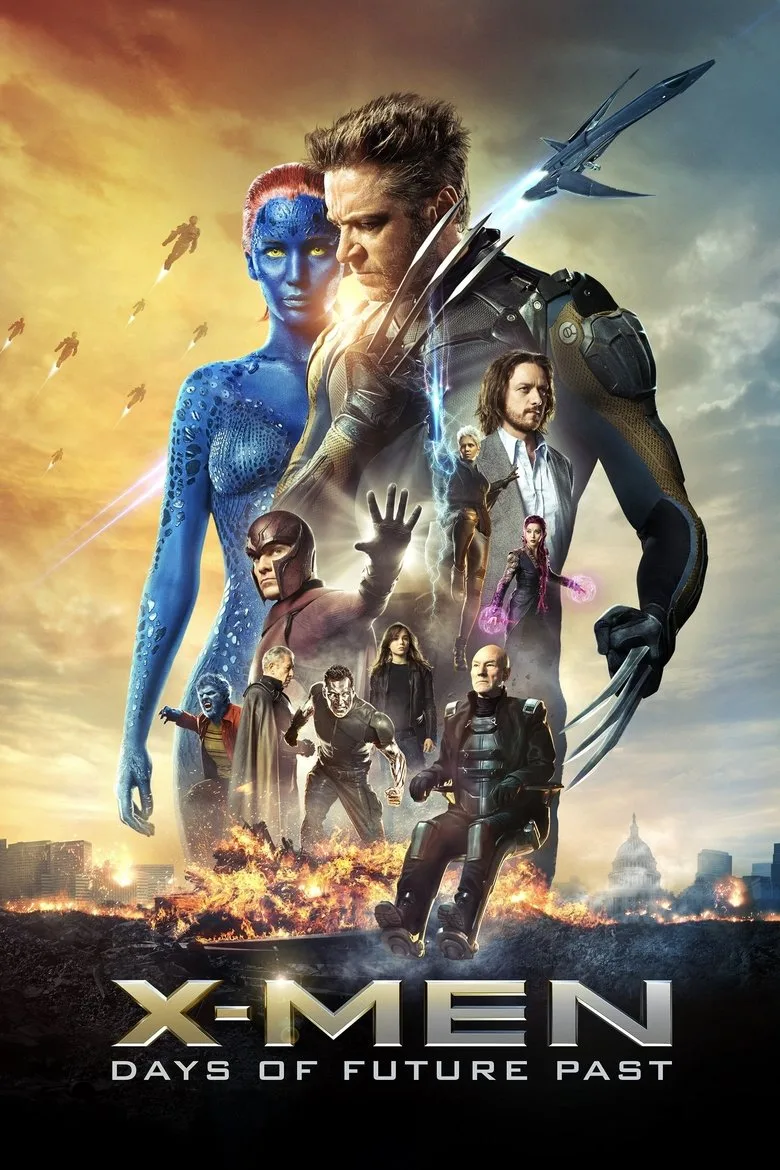
The Direct Answer
No, X-Men: Days of Future Past is not based on a true story in the literal sense of the word. The 2014 film directed by Bryan Singer is a pure science fiction work, revolving around superhuman characters from the world of comics who travel through time to alter the course of history. However, this does not mean the film emerged from a complete vacuum, as it draws on multiple sources — some from the world of comic books, and some that touch on real historical eras as well as philosophical and political ideas rooted in reality. ---The Real Story Behind the Film
Origins in the World of Comics The first and primary source of the film is a comic story published by Marvel in 1981 under the same title "Days of Future Past," written by Chris Claremont and illustrated by John Byrne, published in issues 141 and 142 of the Uncanny X-Men series. That story was a turning point in the history of the X-Men, introducing for the first time the concept of time travel as a mechanism for saving the future. In the original version, Kitty Pryde was the character sent back to the past, while she was replaced in the film by Wolverine for reasons related to audience appeal and dramatic continuity. The Historical Era as a Real Backdrop What lends the film a sense of realism is its use of a genuine historical period: the 1970s in the United States. The events unfold partly in 1973, a year of profound significance in American history — the year of the Watergate scandal, the oil crisis, and the withdrawal of American forces from Vietnam. The filmmakers used this historical backdrop to give the story greater depth, going even further by making Magneto a suspect in the assassination of President John F. Kennedy, a sardonic nod to the conspiracy theories surrounding that real event. The Philosophical and Political Resonance The film raises fundamental questions that are rooted in genuine human thought: Can the past be changed to save the future? And is preemptive violence to prevent danger morally justified? These questions are not the product of fiction alone — they have occupied philosophers and thinkers for centuries, and find their echo in real debates about preventive wars, minority rights, and systemic discrimination. ---The Difference Between Reality and Fiction
Despite its historical backdrop, the core of the film remains firmly in the realm of pure fiction. The genetic mutations that grant humans extraordinary abilities have no basis in real science, the Sentinel machines capable of hunting down mutants do not exist in reality, and the idea of transferring consciousness through time remains, for now, squarely within the domain of science fiction far removed from any practical application. Yet what makes the film emotionally believable is that it grounds its fantasy in a painful reality. The persecution experienced by the mutants clearly mirrors the real experiences of minorities who have suffered discrimination and persecution throughout human history. The Sentinel program, which aims to "cleanse" humanity of a particular element, evokes dark chapters from history — from the Holocaust to apartheid policies. This parallel is no coincidence; it is part of the original vision of X-Men creators Stan Lee and Jack Kirby, who designed the series as an explicit allegory for the struggle for human rights. ---Real Characters in the Film
It is worth pausing to examine the film's use of real historical elements in shaping its characters: Richard Nixon: The real American president Richard Nixon appears in the film as a supporting character — the president of 1973 whom the protagonists seek to persuade not to sign the agreement activating the Sentinel program. This use of a real figure places the fictional events at the heart of a genuine historical moment. William Stryker: Although he is a fictional character, his persona reflects a real archetype of scientists and officials who supported human experimentation programs in the name of national security — an echo of actual covert projects in history. Magneto and Xavier: The relationship between these two characters — mutants who differ in method yet share an identity — clearly represents the dynamic between Malcolm X and Martin Luther King Jr. in the American civil rights movement. Professor Xavier embodies the peaceful, negotiated approach, while Magneto represents the path of violent resistance. This parallel is explicit and intentional, lending both characters a human dimension that transcends the boundaries of fiction. ---Our Take
X-Men: Days of Future Past is not a documentation of real events, nor does it claim to be at any point. Yet at the same time, it is far more than a hollow action film. Its true power lies in its ability to use science fiction as a framework for addressing genuinely profound human issues — the fear of the other who is different, the authority that legitimizes oppression, and the eternal question of whether it is possible to atone for the mistakes of the past. The rating the film carries — 7.5 out of 10 — reflects its success in achieving this delicate balance between entertainment and depth. When you leave the theater after watching it, you will not find yourself wondering about the reality of the Sentinels or time travel. Instead, you will find yourself thinking about something heavier and harder: how institutional hatred begins, and how minorities are transformed into an existential threat in the minds of those who fear them. This is the "truth" the film carries — not in its events, but in what it stirs within those who watch it.📝 This article is an editorial piece based on publicly available information about the film. The author's opinions do not necessarily represent the platform's position, and details may differ from official sources.