

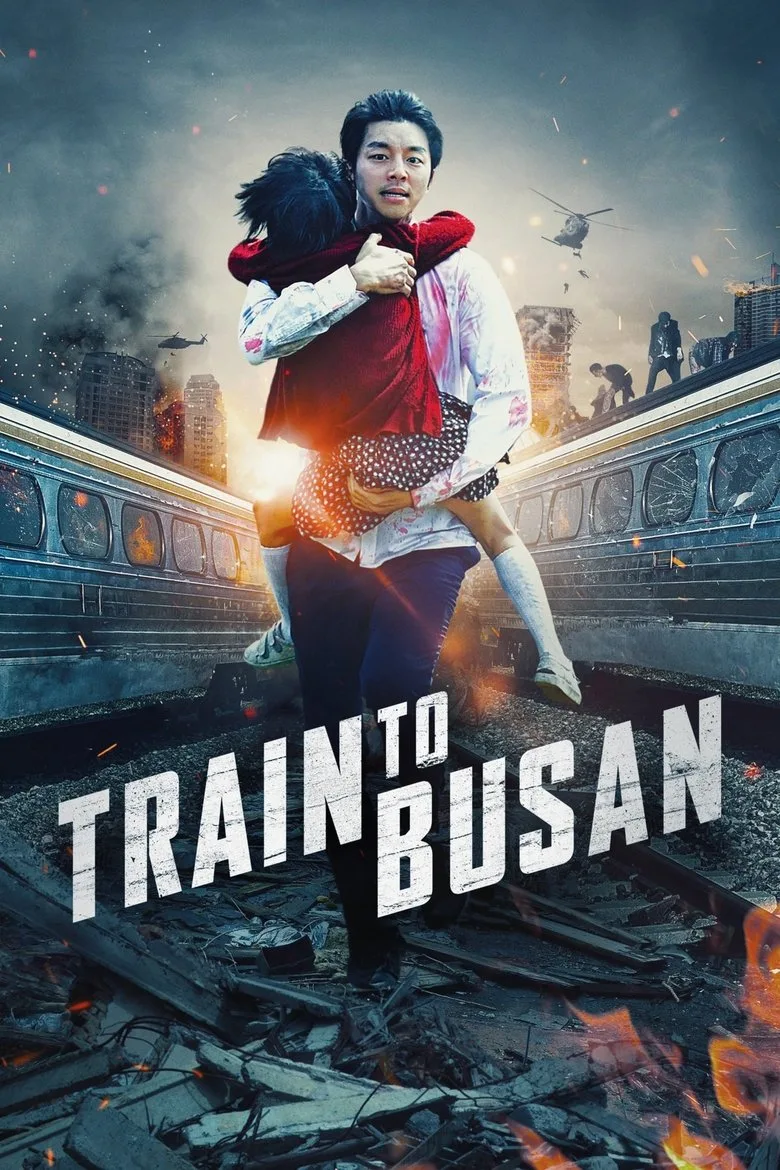
The Direct Answer
No, Train to Busan is not based on a true story in the literal sense of the word. It is an entirely fictional work conceived by Korean director Yeon Sang-ho, who developed the idea from an original story he wrote himself, with the final screenplay then written by Park Joo-suk. However, this does not mean the film was born from a complete vacuum. The truth is that behind it lie layers of real-world social and political inspiration that make it feel far closer to reality than an ordinary zombie film has any right to. ---The Real Story Behind the Film
Social and Political Roots It is difficult to understand this film in isolation from the Korean context in which it was born. The film came in the wake of a genuine human tragedy that shook all of South Korea: the sinking of the Sewol ferry in 2014, which claimed the lives of more than 300 people, the majority of them schoolchildren. That disaster triggered a sweeping wave of public outrage, as it became clear that government negligence, regulatory failures, and institutional corruption were among the primary causes of the catastrophic scale of human loss. Director Yeon Sang-ho never concealed this inspiration. The film carries within it a sharp critique of the Korean capitalist value system, with the wealthy and the powerful depicted as the most selfish and cowardly figures, while ordinary workers and the marginalized emerge as the true heroes who sacrifice themselves for others. Real Viruses as a Reference for Fiction The film also draws on a genuine collective memory surrounding epidemics. South Korea had lived through a harrowing experience with the MERS virus in 2015, just one year before the film's release, and the social panic and governmental confusion in handling that crisis were still fresh in people's minds. This added a layer of psychological credibility to the film, as Korean audiences needed little effort to imagine how the healthcare system could collapse in the face of an unexpected outbreak. ---The Difference Between Fact and Fiction
The film's central events — the spread of a virus that transforms humans into savage, mindless creatures — are, of course, the product of pure imagination. No known virus in history produces the kind of rapid and violent transformation that the film portrays. Yet some elements of the story remain very close to reality: Railway infrastructure: South Korea's high-speed rail network, known as the KTX, genuinely exists and connects Seoul to Busan in a journey of roughly two and a half hours — the very same system that forms the film's backbone. Crisis dynamics: The way people behave during crises — from selfishness to solidarity, from blame to cooperation — reflects patterns that are well documented in social psychology. The absence of an effective government response: The institutional chaos the film depicts in the state's handling of the crisis reflects a critique grounded in real documented events from South Korea itself. ---Real Characters in the Film
The film does not draw on real individuals by name or personal history, but its fictional characters were carefully designed to represent genuine social archetypes that exist within Korean society: Seok-woo, the father so consumed by his work that he neglects his daughter, embodies a broad segment of Korean businessmen swallowed up by a culture of relentless overwork — a phenomenon documented in statistics that consistently rank South Korea among the countries with the highest weekly working hours in the world. Sang-hwa, the rough-mannered manual laborer, is set in direct contrast to the selfish businessman from the upper class. This class tension is not accidental; it is a deliberate commentary on the widening economic divide in South Korea. The pregnant woman represents the idea of life persisting in the midst of mass death — a human symbol that transcends cultures. The cowardly executive, whom the film presents as much a human villain as the zombies are a physical threat, is a personification of the social critique the director so clearly intended. ---Our Take
Train to Busan stands as a striking example of how fiction can be used as a tool for commenting on reality. The director has no need to draw on any single true story, because the film as a whole is saturated with an emotional, political, and social realism that lifts it far beyond the boundaries of its genre. What gives this film its particular weight is not that it recounts a specific incident, but that it captures feelings that are very real: a person's fear of losing those they love, the sense of being let down by the institutions that are supposed to protect them, and the constant question of whether they would choose courage or cowardice when things get desperate. The rating the film carries — 7.748 out of 10 — is not a gift from committees or institutions, but a collective acknowledgment from millions of viewers around the world that this film touched something genuine within them, even as it told a story about zombies on a train. In the end, the finest works of fiction are not those that copy reality, but those that reveal its hidden truths through means that documents and archives would never dare approach.📝 This article is an editorial piece based on publicly available information about the film. The author's opinions do not necessarily represent the platform's position, and certain details may differ from official sources.