

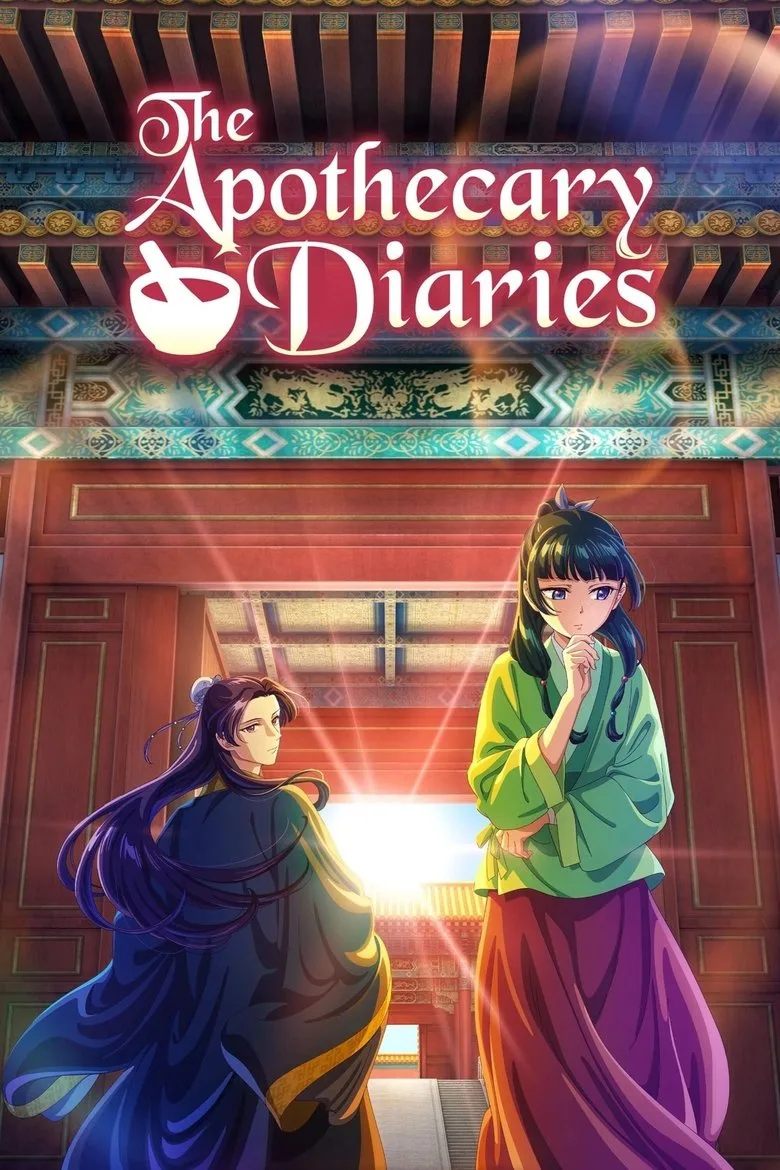
Is The Apothecary Diaries 2023 Based on a True Story?
The Direct Answer
No, The Apothecary Diaries is not based on a true story in the literal sense of the word. At its core, it is an original Japanese literary fiction that began as an online novel written by Japanese author Minoji Natsu under the title "薬屋のひとりごと," before being adapted into an official manga and light novel, and then brought to life as an anime in 2023. However, this does not mean the work was created in a complete vacuum — it drew heavily from ancient Chinese civilization and the history of medical practice in the imperial court, which lends it a tone that feels remarkably realistic. ---The Real Story Behind the Work
From an Internet Novel to an Anime The story of The Apothecary Diaries did not emerge from a historical archive or from the biography of a real woman who lived in royal palaces. It began in 2011 as an amateur novel published by Minoji Natsu on the well-known Japanese platform Shōsetsuka ni Narō, a platform dedicated to amateur content writers. The novel was very well received, and was subsequently adapted into an official light novel with two different illustrators, then into a manga in two different versions, before being produced by Toho Animation in collaboration with OLM as an anime in 2023. Inspiration from Ancient Chinese Civilization Although all the events and characters are fictional, the author drew deeply from Imperial China for her world-building, particularly from the eras of the Han and Tang dynasties. The setting depicted in the work — from the structure of the inner harem to the hierarchy among ladies-in-waiting and consorts, from the role of eunuchs in bureaucratic administration to the rituals of the imperial court — closely mirrors what Chinese historical records have documented. The author also drew clearly on traditional Chinese medicine; the herbs and remedies that Maomao discusses genuinely exist within the Chinese medical heritage, and some of the medical cases she investigates are inspired by real diseases and epidemics that were known during those eras. ---The Difference Between Fact and Fiction
What Is Historically Documented- The harem and ladies-in-waiting system: The imperial harem in ancient China was a complex institution housing thousands of women from various backgrounds. Ladies-in-waiting were sometimes purchased or gifted to the palace, which aligns with Maomao's own circumstances.
- The role of medical knowledge: Some women in the imperial palaces did specialize in medicine, although their access to any official standing was rare and restricted.
- Political poisoning: Poisoning crimes within the imperial court were common and are well-documented in Chinese historical records.
- The character of Maomao herself and her story have no counterpart in history.
- The fictional kingdom in which the events take place is not any specific Chinese kingdom, but rather an unspecified blend whose details evoke more than one era.
- Some of the dramatic plotlines involving conspiracies and mysteries follow the logic of literary narrative rather than the logic of history.
Characters That May Feel Familiar
Maomao: The Analytically Minded Apothecary As a character, Maomao evokes the archetype of the intellectually gifted woman who breaks through social constraints by means of her knowledge rather than her authority. This archetype has precedents in Chinese history — some sources have referenced women who practiced medicine in various eras — but there is no specific individual who can be said to have served as the direct model for Maomao. Jinshi: The Capable Official The character of the handsome, intelligent government official who takes a marginalized person's talent under his wing is a recurring pattern in Japanese literature inspired by China. It has roots in classical Chinese literary stories, but does not point to any specific historical figure. ---Our Take
The Apothecary Diaries proves that a work of fiction does not need real-world events to give the viewer a sense of depth and authenticity. What makes this anime feel as though it is drawn from history is its precision in depicting the social environment, its serious engagement with traditional medicine, and its clear understanding of the power dynamics within the imperial court — and this is no coincidence, but the result of deliberate research on the author's part. The high rating the work carries (8.6 out of 10) clearly reflects that audiences do not always need a "true story" to connect with a work; they need a convincing story, and this is precisely what the series delivers with distinction. Maomao is not a person who existed somewhere, but she represents a genuinely human archetype: the person who finds their strength in knowledge when all other forms of power have been taken from them. If you are looking for a genuinely historical anime, this is not the right place. But if you are looking for a work that makes you feel as though you are learning something real about an ancient world while following a tightly crafted narrative, The Apothecary Diaries fulfills that purpose with great efficiency.📝 This article is an editorial piece based on publicly available information about the film. The author's opinions do not necessarily represent the platform's position, and details may differ from official sources.