

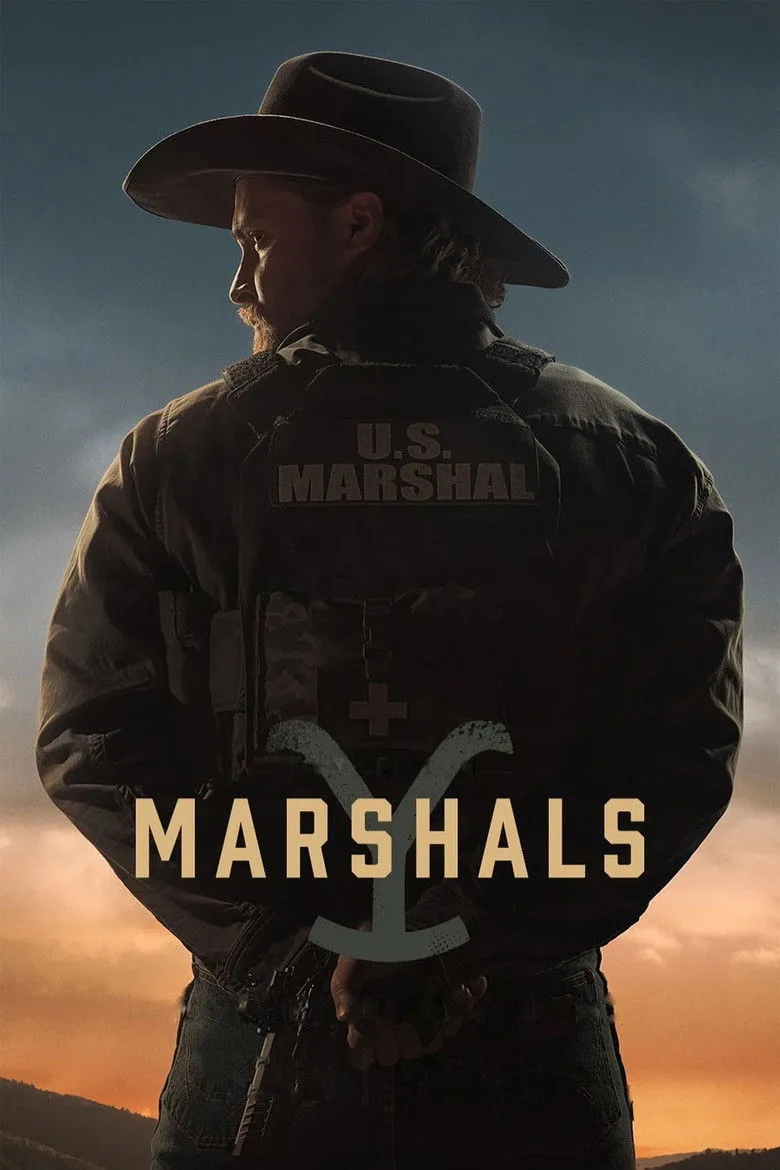
Is Marshals 2026 Based on a True Story?
The Direct Answer
Marshals is not based on a specific true story or any incident documented in official records. It is a dramatic work of original fiction, set in an imaginary world, though it draws clearly on a real environment and a genuinely existing institution — the U.S. Marshals Service, one of the oldest law enforcement agencies in the United States. The story is therefore a product of imagination, but it draws its roots from a real professional and geographical reality, giving it an authenticity that feels genuine to viewers. ---The Real Story Behind the Film
Although the events depicted in the film are fictional, its makers did not build their world from nothing. Three real elements form the backbone of the film: First: The U.S. Marshals Service The U.S. Marshals Service was established in 1789 as the first federal law enforcement agency in the history of the United States. It specializes in hunting fugitives, securing federal courts, protecting witnesses, and carrying out judicial orders. What makes it rich cinematic material is the nature of its field operations in remote areas and across vast territories that local police forces cannot easily reach — which is precisely what the film depicts in the wilderness of Montana. Second: Montana and Remote Wilderness Environments Montana is not merely a beautiful visual backdrop in the film; it carries its full real-world weight. This vast American state, with its low population density and rugged terrain, has historically posed genuine challenges to law enforcement agencies. Organized crime, drug trafficking, and kidnapping operations in these isolated regions are documented phenomena, not inventions of the film's writers. Third: The Returning Warrior Phenomenon The psychological background of the film's protagonist — a man carrying a military past who tries to build a quiet life on a farm before the badge pulls him back in — reflects a documented social phenomenon and numerous psychological studies concerning veterans who struggle to separate their past from their present. This internal conflict is not a product of the writers' imagination; it is a reality lived every day by thousands of former American servicemen and women. ---The Line Between Fact and Fiction
The dividing line in this film is relatively clear if you look closely: What is real: - The existence of the U.S. Marshals Service and the nature of its field operations - The described geography and crime zones in the remote American West - The psychological tension between civilian life and military/law enforcement identity - The challenges faced by law enforcement agencies in areas far from urban centers What is fictional: - All of the characters, including the main protagonist and the members of his unit - The details of the cases and crimes depicted in the film - The dramatic events and plot developments - The personal relationships and internal conflicts as specifically drawn This style of writing — fiction wearing the cloak of realism — is very common in American crime and thriller films, and it is what makes viewers feel that what they are watching "could have actually happened," even if it never did. ---Real Characters in the Film
The film does not draw on documented real individuals identified by name. The main protagonist, a former farm-dwelling man who returns to the badge, is a composite character whose traits are inspired by general archetypes rather than any specific individual. The filmmakers chose to give themselves complete narrative freedom rather than binding themselves to actual events — an understandable choice in a dramatic context that aims to build its own emotional tension without the constraints that true stories impose. What can be said is that the protagonist's character broadly resembles the profiles of real Marshals officers discussed in American journalistic reports — people coming from military or law enforcement backgrounds, working in remote areas, and experiencing tension between the demands of the job and their personal lives. But he does not represent any one of them by name or specific detail. ---Our Take
Marshals makes a respectable narrative choice by opting for reality-grounded fiction rather than making a false claim of being "based on true events." This type of film carries its own distinct value because it opens the door to shaping characters with genuine depth without constraining itself to rigid historical details. The film's rating of 7.9 out of 10 suggests that audiences found enough in this formula to place their trust in it. Tightly constructed real-world settings — such as the world of the Marshals in Montana — often produce more convincing films than those that claim to be based on true stories and then take excessive liberties with them. The film does not need a "based on a true story" stamp to be convincing. The Montana wilderness exists, the Marshals exist, and veterans fighting battles within themselves exist too. That is enough.📝 This article is an editorial piece based on publicly available information about the film. The author's opinions do not necessarily represent the platform's position, and details may differ from official sources.