

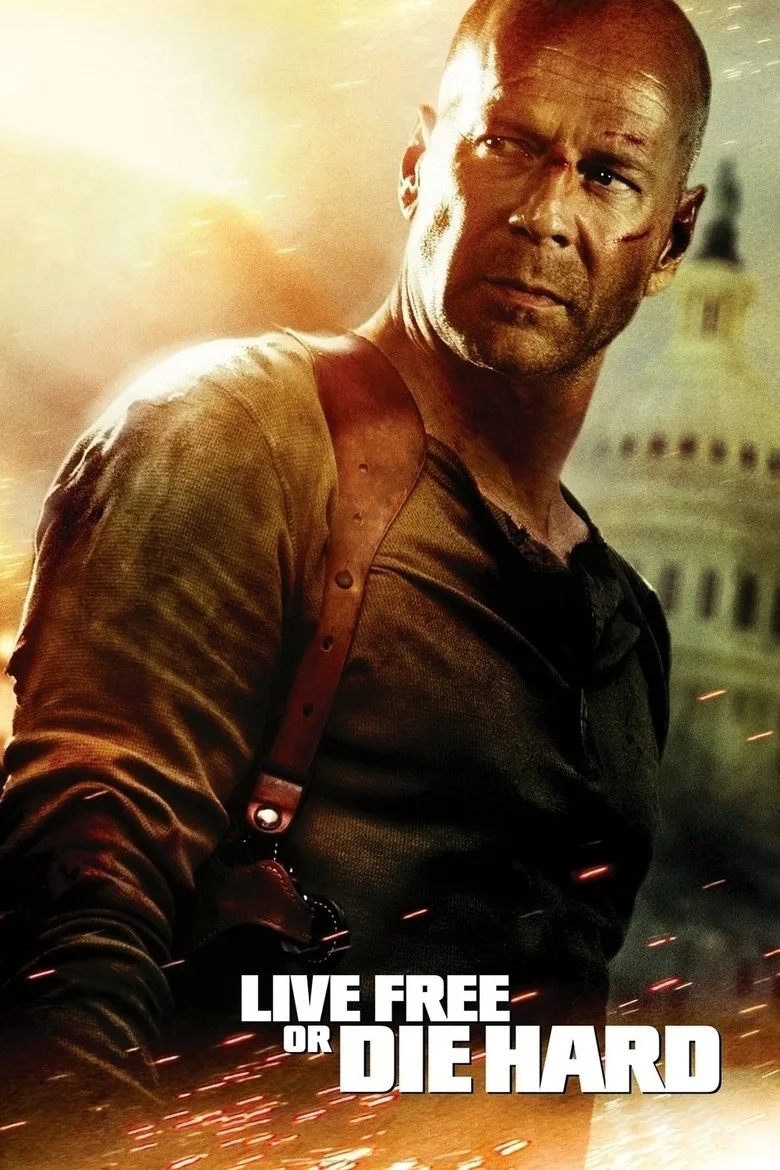
Is Live Free or Die Hard (2007) Based on a True Story?
The Short Answer
No, Live Free or Die Hard is not based on a true story in the strict sense of the word. It is part of the acclaimed Die Hard franchise, which follows Detective John McClane — a completely fictional character. However, that does not mean the film came out of nowhere. It drew its core ideas from real-world events and from reports and studies that were genuinely published about cybersecurity concerns in the United States, giving it a feel that is closer to reality than the franchise's previous installments. ---The Real Story Behind the Film
The fundamental root of the film's concept traces back to an article published in 1997 in the American technology magazine Wired, written by John Sinclair under the title "A Farewell to Arms". However, the more influential source for the screenplay was another article published in the same magazine by Marcus Thomas under a title roughly equivalent to "Die Hard" — in which the piece examined in considerable detail the vulnerability of America's digital infrastructure to coordinated cyberattacks. Screenwriter Mark Bomback drew on these real concerns when crafting the story. The concept of a full-scale cyberattack — referred to in the film as a "Fire Sale," a simultaneous strike targeting power grids, water systems, transportation networks, and communications — was not mere science fiction. It had been the subject of serious discussion within American national security circles at the dawn of the new millennium. In fact, U.S. government agencies had issued actual reports warning of the potential for infrastructure to be targeted by cyberattacks, and both the FBI and the CIA had begun developing specialized cybersecurity units years before the film's release. The film, therefore, did not invent the issue — it simply wrapped it in a cinematic package of action and suspense. ---The Difference Between Fact and Fiction
Despite the real-world foundation the film stands on, the gap between what it portrays and what could actually happen is wide in many respects: What is exaggerated: An attack of the scale, speed, and coordination shown in the film — where entire networks collapse within minutes — ignores the genuine engineering complexity of these systems. In reality, most critical infrastructure operates on networks that are isolated or semi-isolated from the public internet, making them far harder to breach than the film implies. Likewise, the scene in which a helicopter is taken down by a car launched into the air requires no commentary — that is pure entertainment. What is close to reality: The idea that hackers can be recruited by hostile entities, the way hackers exploit software vulnerabilities in government systems, and the very real challenge of protecting a vast and interconnected infrastructure — all of these elements reflect genuine concerns rather than mere fantasy. ---Real-Life Parallels in the Characters
The film does not feature characters directly inspired by specific real individuals, but the character of "Matt Farrell," the young hacker who teams up with McClane, reflects a genuinely existing archetype in the world of cybersecurity — known as the "Ethical Hacker": individuals with advanced technical skills who sometimes work with governments and corporations to expose security vulnerabilities. The main villain, "Thomas Gabriel," conceptually echoes concerns raised by certain analysts about the possibility that perpetrators of major cyberattacks could be individuals who previously worked within the very government security agencies they later target — a scenario that is far from implausible, as numerous subsequent cases have demonstrated. ---Our Take
Live Free or Die Hard holds a special value in that it tackled a subject that was, at the time, still in the realm of serious debate — before cyberattacks became daily news we read about in the papers. The film was not telling a true story, but it was asking a real question: how vulnerable are we to someone who knows which buttons to press? The franchise as a whole has historically chosen to take contemporary issues and crises — from hostage-taking to terrorism to cyber warfare — and place them within a straightforward action framework. This approach makes the films more relatable to audiences, even when the specifics of their execution are far removed from reality. The film's rating of 6.6 out of 10 reflects a divided opinion; fans of the franchise found it a notable return to form, while others felt it exploited genuine fears in service of over-the-top adventures. But ultimately, if you are looking for a documentary about cybersecurity, this is not the place to find it — and if you are looking for an action film that grabs a thread of reality and then soars far away with it, this is exactly what you will get.📝 This article is an editorial piece based on publicly available information about the film. The author's opinions do not necessarily represent the platform's position, and details may differ from official sources.