

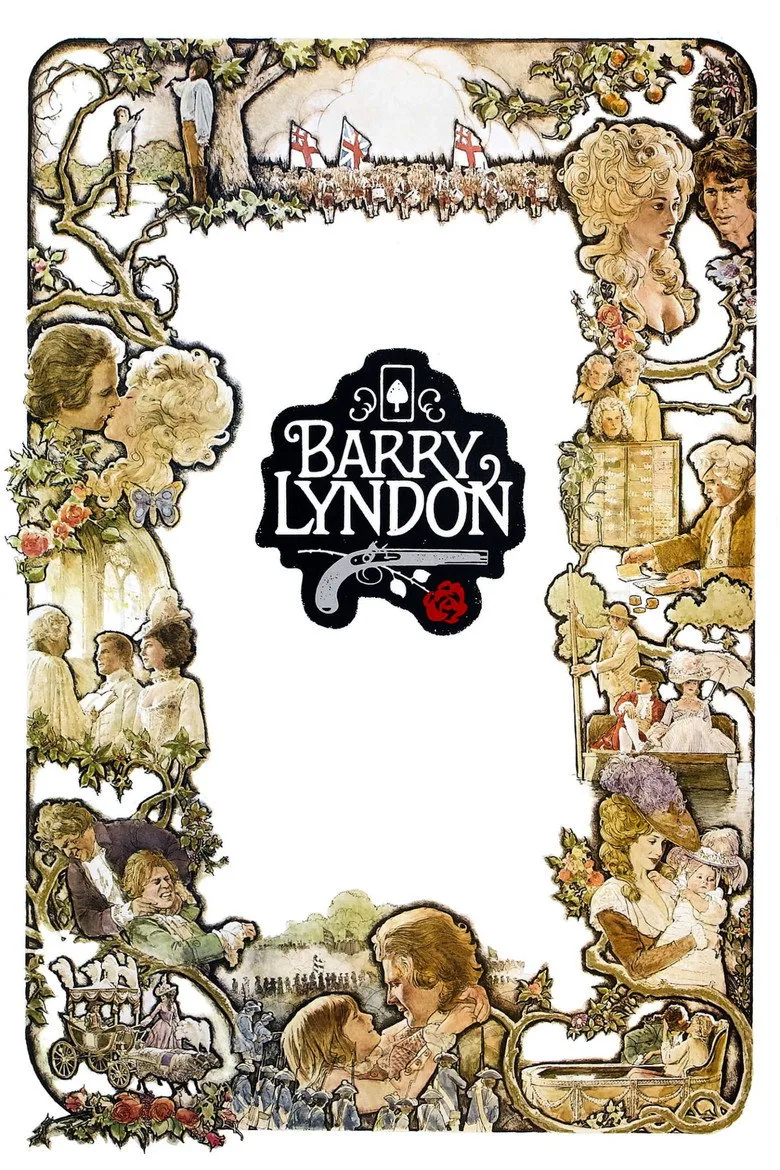
Is Barry Lyndon (1975) Based on a True Story?
The film Barry Lyndon is considered one of the most cinematic works that spark viewer curiosity about its sources, especially after Stanley Kubrick presented us with this unique visual work in 1975. The question many ask: is this a true story from history, or is it a work of fiction? The answer carries important points worth exploring.
The Direct Answer
Barry Lyndon is not based entirely on a true story; rather, it is an adaptation of a classic literary novel published long ago. The film is inspired by "The Memoirs of Barry Lyndon" by Irish author William Makepeace Thackeray, which was first published as a serial in 1844. Therefore, the film is not a documentation of a specific historical event, but rather a cinematic adaptation of a fictional literary work that evokes the atmosphere and historical details of the eighteenth century.
This is an important point that distinguishes Kubrick from other directors: he did not seek to present a true biography, but rather decided to transform a literary novel into a film while preserving the essence of the original text while adding his own visual vision.
The True Story Behind the Film
William Makepeace Thackeray's novel "The Memoirs of Barry Lyndon" represents a literary work that uses satirical style to criticize European society in the eighteenth century. The novel was not a documentation of a known real character, but rather a creation of the writer's imagination, who drew inspiration from the atmosphere and general events of that era.
Stanley Kubrick chose this text because it provided him with a unique artistic platform. The original novel presents a narrative in which the main character speaks directly and frankly about his life, and this gave Kubrick the opportunity to reframe this narrative on screen. Kubrick chose an exceptional visual style in which he used natural candlelight to film the scenes, thereby emulating the paintings of classical artists from that era.
The Difference Between Fact and Fiction
While the film presents a historical depiction of the eighteenth century in terms of clothing, customs, and military events, the character of Barry Lyndon himself is purely fictional. There is no real person named Barry Lyndon who undertook the same adventures depicted in the film.
The historical background of the events, particularly the wars and political conflicts, is inspired by reality. The wars of King Frederick II of Prussia, the Irish independence struggle, and European conflicts are all real events. However, the character of Redmond Barry and his transformation into Barry Lyndon, along with the stories of his love, marriage, rise, and fall, are all creations of literary fiction.
The film blends precise historical details with fictional narrative in a way that makes the viewer live in a world that feels real, but is actually a skillfully crafted artistic construction that combines historical research with narrative creativity.
Real Characters in the Film
While Barry Lyndon is a fictional character, the film features a number of real historical figures. For example, King Frederick II of Prussia is mentioned and appears in the context of the wars in which Barry participates. The military events and historical contexts maintain a high degree of historical accuracy.
This blending of real and fictional characters is a famous literary technique used by writers and directors to add credibility to fictional narratives. It makes viewers feel as if they are witnessing a real historical event, even though the main character is a product of imagination.
Our View
Barry Lyndon reflects Stanley Kubrick's vision in transforming literary texts into profound cinematic experiences. The goal was not to document a true story, but to present an artistic reflection on human ambition and the pursuit of social status in a particular era. Thackeray's original novel was satirical, and Kubrick maintained this spirit.
The real value of the film does not lie in the fact that it tells a true story, but in that it presents a unique cinematic vision that redefines how we can use history and imagination together. The historical accuracy in details such as clothing, customs, and military formations, juxtaposed against complete freedom in storytelling, creates a work that feels real even though it does not document actual events.
Ultimately, Barry Lyndon is a fictional character, but his fictional nature reflects a broader human truth: the pursuit of social advancement and wealth often leaves man lonelier and more miserable than before. This message, whether from Thackeray's pen or Kubrick's camera, remains true and valuable regardless of the origins of his character.
📝 This article is editorial content based on publicly available information about the film. The author's opinions do not necessarily represent the platform's position, and details may differ from official sources.