

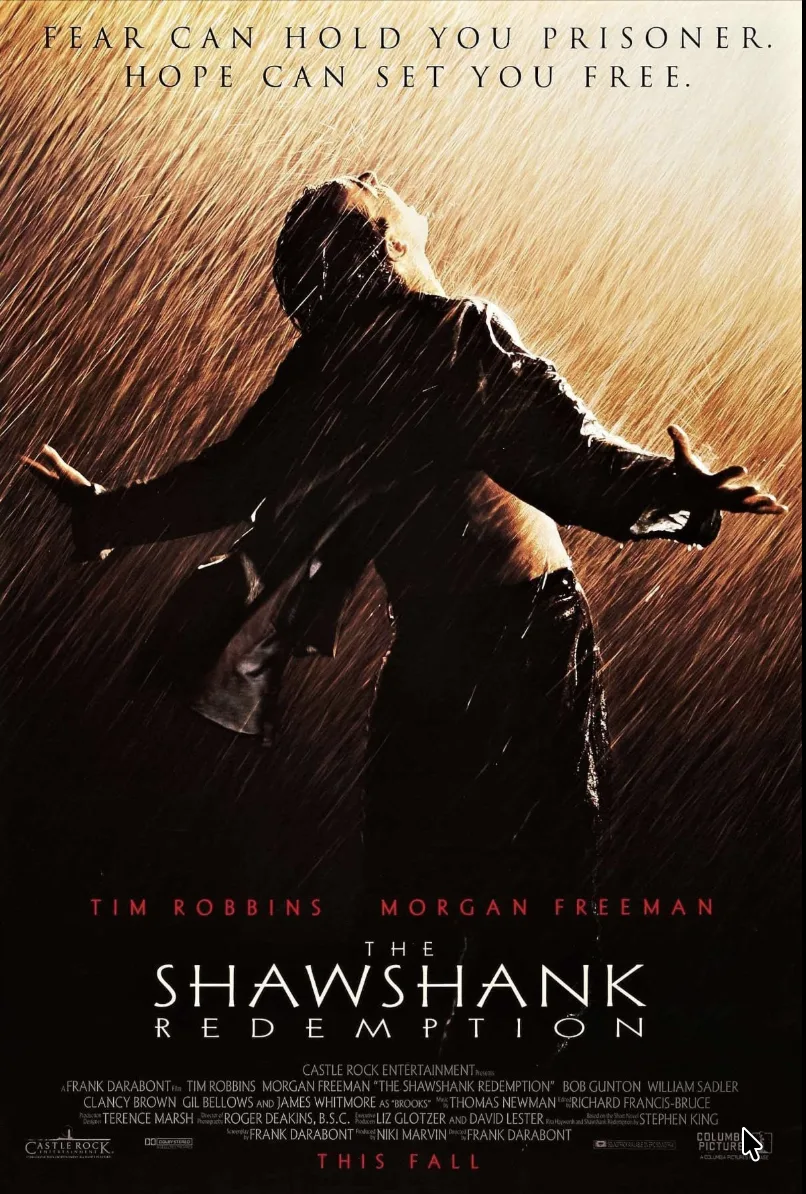
The Shawshank Redemption concludes with one of cinema's most satisfying finales. After nearly two decades of imprisonment, Andy Dufresne finally escapes Shawshank Prison, and we witness his reunion with his closest friend, Red. But what makes this ending so powerful isn't just the escape itself. It's the promise of freedom, friendship, and the victory of hope over institutionalization. Let me break down exactly what happens and why it matters so much to the film's overall message.
Plot Summary
Andy Dufresne, a banker falsely convicted of murdering his wife and her lover, has spent nineteen years in Shawshank Prison. Throughout his incarceration, he befriends Red, a long-term inmate and prison fixer who can obtain almost anything contraband. Andy never loses hope. He maintains his dignity, uses his financial skills to help the corrupt Warden Norton launder money, and secretly digs his way out of prison using a small rock hammer hidden in a poster.
The prison operates as a system designed to break men. Warden Norton exploits inmates for profit. Guards brutalize prisoners. Andy's persistence in maintaining his humanity—playing classical music over the loudspeaker, maintaining his cell library, studying law—becomes his silent rebellion. Red, on the other hand, has accepted institutionalization. He's comfortable in prison. Freedom terrifies him. This contrast between the two men drives the emotional core of their entire relationship.
The Ending Explained
Andy's escape happens with precision. He crawls through the sewage pipe he's spent years enlarging with his hammer. The escape is physical and literal, but it's also symbolic. He emerges covered in filth—the excrement and waste of the institution—but he emerges alive and free. He stands in the rain, arms spread wide, finally experiencing the freedom he never stopped believing in.
Andy leaves behind evidence of his escape for the authorities. He's also left evidence of the Warden's crimes. The investigation that follows exposes the corruption, leading to the Warden's arrest and eventual suicide. This is crucial. Andy doesn't just escape; he brings justice. His intelligence and patience allow him to dismantle the corrupt system from within.
Meanwhile, Red remains in prison. He's released on parole after serving his sentence. The parole board has finally deemed him rehabilitated—though I believe the real truth is that Red was never truly unreformed. He was simply pragmatic. Once free, Red faces something terrifying: the outside world. He struggles with it. The world has changed. He's institutionalized. Everything feels wrong and too fast.
But then Red remembers. Andy once told him about a place called Zihuatanejo, a small Mexican beach town where Andy hoped to live in freedom. Andy also told Red that if he ever got out, he should go to a specific location to find money and instructions. Red follows this path, finds the money Andy left behind, and eventually travels to Mexico. At the beach in Zihuatanejo, the two men reunite.
The final scene is brief but overwhelming. Red walks down the beach and sees Andy there, alive and free, working on a boat. They embrace. There's almost no dialogue. The moment speaks for itself. These two men, bound by years of friendship in a place designed to destroy humanity, have both escaped. One through cunning and hope. One through memory and trust.
The film also fits naturally among drama movies built around character growth, emotional endurance, and the cost of freedom.
The Deeper Meaning
I believe the ending works on multiple levels. First, it's a literal victory. Andy has escaped prison. He's punished the corruption he witnessed. He's reclaimed his life. But there's more happening beneath the surface.
The ending is fundamentally about what hope can accomplish:
- Andy's hope sustains him through nineteen years of confinement
- His hope inspires Red, even when Red has given up
- His hope creates a plan that eventually saves both men
- His hope is contagious—it spreads from person to person
Red's journey in the ending is equally important. He represents institutionalization. He's comfortable in prison because prison is all he knows. Freedom actually scares him more than imprisonment. When he gets out, he's lost. The world is too big. The choices are too many. But Andy's memory—and the faith Andy had in him—pulls Red toward freedom.
In my view, the beach reunion represents more than two friends meeting. It represents the triumph of hope over despair. It shows that maintaining your humanity and your dreams, even in the darkest circumstances, can lead to actual freedom. Not just physical freedom, but psychological and spiritual freedom.
The rain scene where Andy escapes is particularly brilliant. He crawls through literal filth to reach freedom. The film suggests that freedom isn't clean or easy. It's messy. It's degrading in the moment. But it's necessary. And once you achieve it, you can finally breathe.
Our Take
The ending of The Shawshank Redemption satisfies emotionally and thematically. It doesn't feel like a trick or a false resolution. It feels earned. We've watched Andy for nearly two and a half hours, seen his patience, his quiet determination, and his refusal to become bitter or broken. When he escapes, we've already invested in his success.
What makes it linger with audiences is its simplicity. The ending doesn't overcomplicate itself. It doesn't need explosions or dramatic revelations. Two men find each other on a beach. That's it. That's enough. Because the entire film has prepared us to understand that this moment represents everything.
The friendship between Andy and Red becomes the emotional through-line of the entire story. The escape matters because it reunites them. The freedom matters because they get to share it. In my estimation, this is why audiences respond so deeply to this film. It understands that human connection is more valuable than anything else. More valuable than money, more valuable than safety, more valuable than comfort.
Frank Darabont adapted Stephen King's novella into something genuinely moving. The ending doesn't betray the story. It fulfills it. It's a reminder that hope is not naive. It's not weakness. It's one of the most powerful forces available to us.