

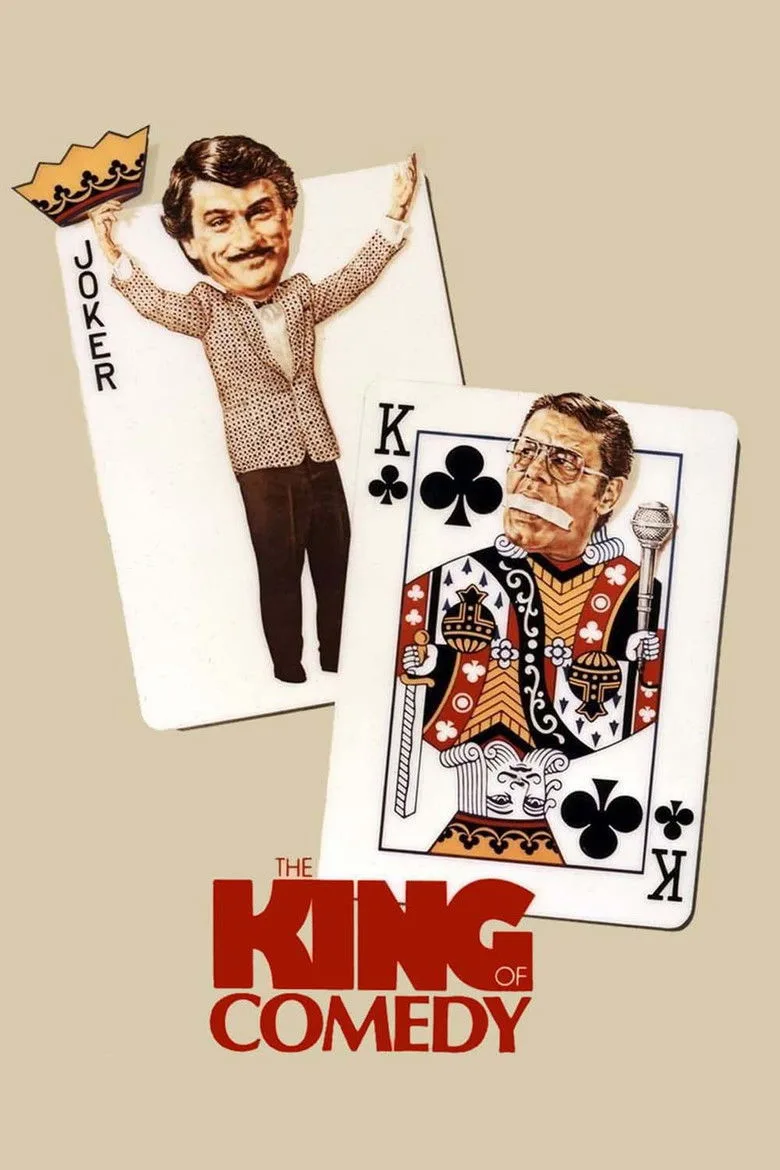
Summary of Events and the Path Toward the Ending
The King of Comedy traces a complete journey of obsession and psychological breakdown. The film does not tell an ordinary success story. Instead, it portrays a person drowning in delusions of fame, desperately seeking to get closer to a famous talk show host. Ambition transforms into intrusion, and persistence becomes a psychological illness. Repeated rejection does not deter the protagonist from pursuing his goals; rather, it pushes him toward more dangerous and audacious actions.
The cinema follows every step of this descent with frustrating precision. We watch how the boundary between dream and reality collapses. The main character lives in his own world, a world that cruel New York has not accepted. Each rejection wounds him, but it does not wake him from his dream. On the contrary, it drives him to increasingly reckless and dangerous steps. The film builds tension slowly, foreshadowing a dark ending.
Interpreting the True Ending
The ending arrives as a deceptive, glittering shock. After the dramatic events that reach their climax, we find ourselves in a peculiar scene. The protagonist appears on screen, performing his comedy act, and the audience laughs. But something is wrong with this image. Is this real or merely a fantasy? Has he finally succeeded, or is he trapped inside his sick mind?
The answer is intentionally ambiguous. The ending does not directly clarify for us whether what we see is real or an illusion. But the context strongly hints at the bitter truth. The man achieved his success, but at an extremely high price. Fame came, but it came stained with pain, crime, and prison. The ending tells us something bitter: even when you get your dream, the price may be more than you can bear.
The Deep Meaning and the True Message
The King of Comedy is not just a film about failure. It is about the divide between how we perceive ourselves and how others see us. The protagonist sees himself as a star, a comedy genius. The city sees only an annoying, persistent man, a source of irritation. This gap between fantasy and reality drives him to madness.
The film critiques the system that creates stars. It asks: how can you succeed if the doors are closed? How do you fulfill yourself when everyone tells you no? Some see in the film a critique of the media and television industry. Stardom has become a game for the wealthy and well-connected. Talent alone is not enough. You need audacity, luck, and sometimes desperation.
The ending reinforces this message. Yes, he achieved success. But it came through kidnapping and resorting to violence. Does this not tell us something about the city itself? Is there really no other way? Is madness the only price of ambition in New York? The film leaves these questions hanging in the air.
The Intentional Ambiguity and Different Readings
One of the strongest aspects of the ending is that it accepts multiple interpretations. If you watch the film again, you will find yourself questioning what you saw. Is it true that the protagonist was released from prison and achieved his dream? Or is he still imprisoned and imagining all of this?
Some see the ending as a bittersweet victory. The protagonist did what seemed impossible. He achieved his dream in a brutal way, but he achieved it. Others see it as a final defeat. The man got nothing real. Even if he was released from prison, what he obtained will not make him truly happy. Stardom built on violence and crime will not heal his inner wound.
Our View: A Painful Journey to a True Mirror
The King of Comedy pinches you from the inside. The film does not make you feel comfortable. You watch it and feel anxious the entire time. The cinematic pace is suffocating. The music is unsettling. Every scene makes you feel as though you are watching a disaster that will inevitably happen.
And the ending confirms this feeling. It is neither liberating nor offers peace. Instead, it leaves you with a sense of unease. Even if the protagonist triumphs in some way, that triumph tastes bitter. You may find yourself sympathizing with him despite everything he has done. This is true artistry in cinema. A film that makes you feel the impossible, that makes you understand someone who cannot be understood, that makes you see yourself in an ugly mirror.
📝 This article is editorial content based on publicly available information about the film. The author's opinions do not necessarily represent the platform's position, and details may differ from official sources.