

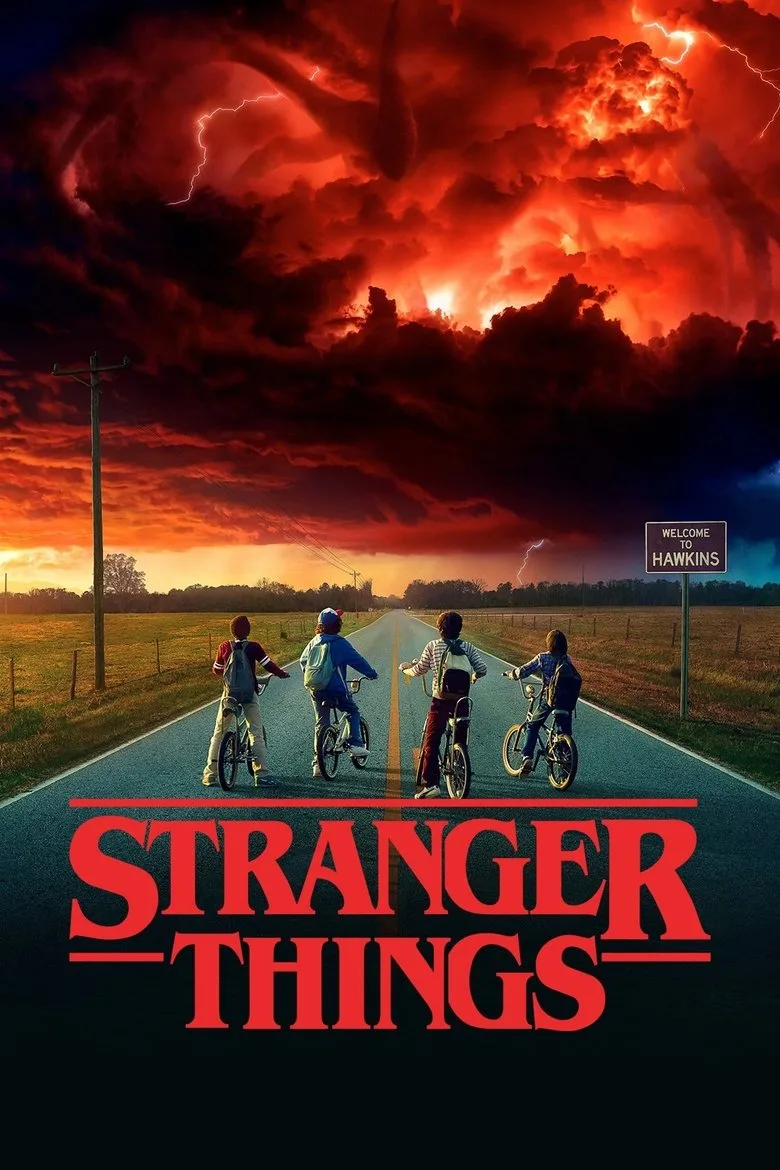
Stranger Things 2016 Ending Explained
What Happened at the End of the Season? A Summary of the Final Events
In Stranger Things, we watch the quiet town of Hawkins transform into a place whose silence can no longer be trusted. The story begins with the disappearance of a young boy named Will, and ends with scenes that leave the viewer in a state of genuine suspense. It is not a comfortable ending in the traditional sense, and I believe that is the smartest choice the creators made.
In the final episodes, the truth of what has been happening inside the secret laboratory is fully revealed, and the confrontation reaches its peak as the limited forces of humanity collide with a creature from another dimension. The characters do not emerge from this battle entirely unscathed, and that is what makes the ending feel grounded despite all the fantasy it carries. The girl who holds secrets and extraordinary powers — Eleven, played by Millie Bobby Brown — offers herself as a sacrifice to save the others, or so it appears at first glance.
Will comes back, but his return is not a clean one. There is something lodged inside him, something he brought back with him from the other side. The final scene hints at this with deliberate quietness, opening a door of questions for the viewer rather than closing one.
Interpreting the Ending: What Really Happened?
Is the salvation the season arrives at genuine? That is the fundamental question the ending poses without answering directly.
Eleven disappears after the confrontation with the creature known as the Demogorgon. Yet the closing scenes suggest that Chief Hopper — played by David Harbour — is leaving food in a box out in the woods, a clear gesture indicating that something, or someone, is still out there. That small scene changes the way you read the entire ending. Eleven did not vanish — she may simply be hiding.
As for Will, the scene that shows him in the bathroom reveals a moment where the Upside Down breaks through into his present reality. This means that the return to normal life was not a complete one. Part of him is still there, or perhaps part of "there" is still inside him. The difference between these two interpretations matters for anyone trying to understand what awaits in the seasons ahead.
The music composed by Kyle Dixon throughout the season plays a pivotal role in these moments. I noticed that the score during the ending scenes does not give a sense of conclusion, but rather of suspension — as if the music itself is telling you: do not relax just yet.
The Deeper Meaning: What Did the Creators Want to Say?
Stranger Things is not simply a horror story in the conventional sense. The ending carries another layer, one concerned with the idea that some wounds do not heal merely because the surface problem has been resolved.
Will's family waited for him and fought for him, and when he returned, they believed the nightmare was over. But the ending teaches us that returning does not mean being fully healed. This meaning reaches beyond the boundaries of science fiction and touches something genuinely human — the idea that someone who has lived through a traumatic experience does not come back exactly as they were.
Joyce, played by Winona Ryder with an intense presence throughout the season, represents the mother who never stops believing even when everything seems to be working against her. The season's ending gives her what she wanted, but it hints that what she has received carries its own price.
Eleven, for her part, represents the character who paid the highest cost. A child who never knew a normal life to begin with finds herself alone once again at the end — or in the woods, at least. This raises an uncomfortable moral question: was it fair that she bore the entire burden while everyone else returned home?
The Actors' Performances in the Final Scenes
What makes this ending work is what happens on the actors' faces rather than in the dialogue. Finn Wolfhard and Gaten Matarazzo in the final scenes among friends convey a strange feeling — the joy of reunion mixed with the absence of someone essential.
David Harbour in the scene with the food box in the woods says almost nothing. Yet his choice to do it alone, away from everyone, says everything. Hopper's character carries an old personal grief throughout the season, and his connection to Eleven in that moment feels as though it is filling a void he has never admitted to anyone.
Millie Bobby Brown played Eleven with the fewest possible words and the greatest possible expression. The final scenes before her disappearance rely on what happens in her eyes more than on anything in the dialogue, and that kind of performance is simultaneously the most difficult and the most effective.
Our Verdict on the Ending: Was It the Right Choice?
In my view, the ending made a brave choice by refusing to provide complete answers. Many productions fall into the trap of a satisfying finale that ties up every narrative thread and gives the audience exactly what it wants. Stranger Things chose to leave a door open, but not open onto emptiness — rather, onto specific questions that carry real weight.
Could the ending have been presented differently? Perhaps. The final scene with Will works well, but it relies on the viewer having paid full attention throughout the entire season. Someone who watched distractedly might miss what is being implied, and that could be considered a weakness in the ending's narrative structure.
But the most affecting scene, in my view, remains Hopper and the food box. It is the scene that determines how you will think about everything you watched before it. A show that deserves a rating of 8.568 out of 10 — not only for its thrills, but for this kind of quiet narrative intelligence.
📝 This article is an editorial piece based on publicly available information about the show. The author's opinions do not necessarily represent the platform's position, and some details may differ from official sources.