

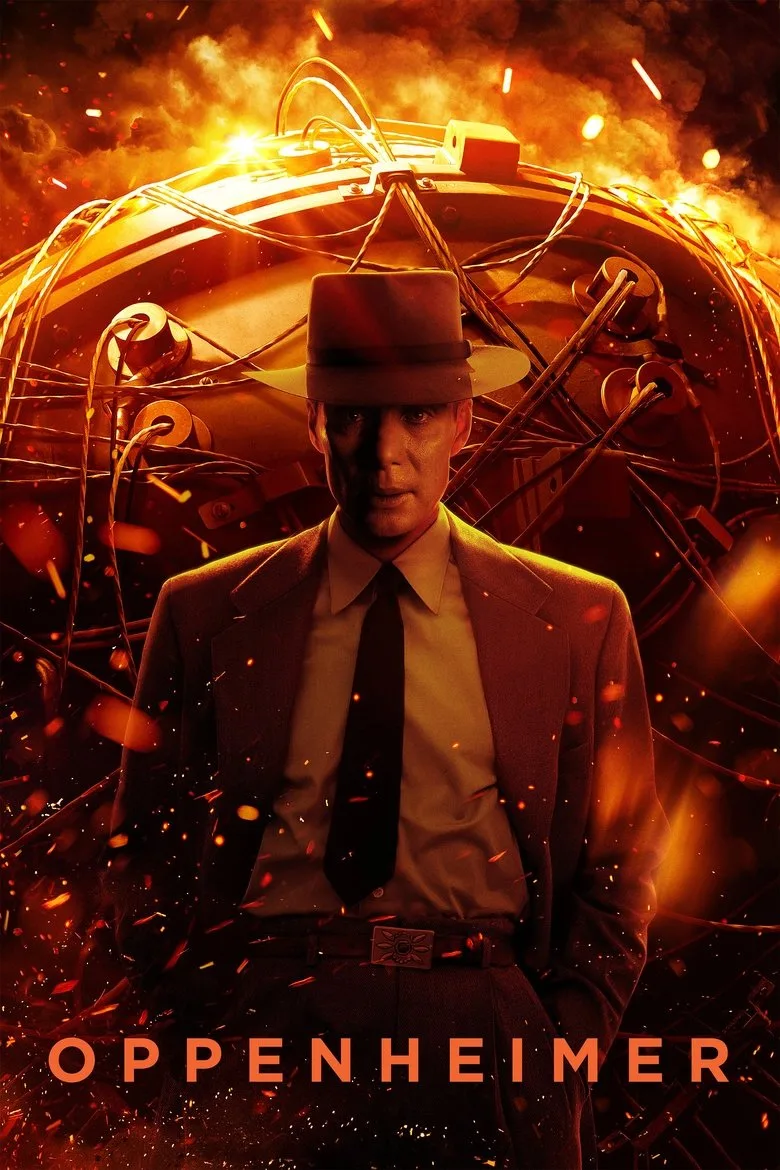
Plot Summary
Christopher Nolan's Oppenheimer traces the life of J. Robert Oppenheimer from his early days as a theoretical physicist through his leadership of the Manhattan Project during World War II. The film weaves between multiple timelines, showing his rise to prominence in the scientific community, his recruitment to lead the secret weapons development program at Los Alamos, and the aftermath of his creation. Throughout the narrative, we witness Oppenheimer's brilliance, his moral conflicts, and the complex web of relationships that define his journey. The story culminates in the atomic bomb's detonation at Trinity and the subsequent congressional hearings that would define his legacy and reputation for decades to come.
The Ending Explained
The film's conclusion presents a man utterly transformed by what he has created. After the Trinity test succeeds, Oppenheimer stands amid celebrating scientists, yet he appears haunted rather than victorious. In my view, this moment encapsulates the central tension of the entire film. He has achieved the impossible—unlocked the power of the atom itself—but the weight of responsibility immediately crushes any sense of triumph.
The final act pivots to the congressional hearings, where Oppenheimer faces interrogation about his past associations and his current opposition to further nuclear weapons development. I noticed that Nolan structures these scenes to show a man stripped of his authority and influence. The same government that elevated him to god-like status now turns on him. His security clearance is revoked, his reputation damaged, and his relevance diminished. This reversal feels almost inevitable in hindsight—a powerful institution cannot tolerate a conscience, especially one as prominent as Oppenheimer's.
The closing moments show Oppenheimer in quiet reflection, likely his final days. There is no redemption arc, no grand absolution. Instead, we see acceptance of his permanent burden. He quotes Sanskrit: "Now I am become Death, the destroyer of worlds." This line, spoken earlier in the film with boyish wonder about the power of physics, now carries the full weight of genocide. The ending refuses to offer comfort. Oppenheimer must live with what he has done, knowing the innocent lives his creation would claim.
The Deeper Meaning
What strikes me most about this ending is its refusal to judge Oppenheimer in simplistic terms. The film doesn't present him as a villain, though his actions had devastating consequences. It also doesn't present him as a hero, despite the genuine brilliance and scientific contributions he made. Instead, Nolan explores the tragedy of a morally aware person trapped within circumstances beyond his control.
I believe the film argues something provocative: that consciousness itself becomes a punishment. Oppenheimer understood the implications of his work better than most. He recognized that creating such a weapon would introduce a new era of human vulnerability and potential annihilation. The government, military leaders, and political establishment didn't want his doubts. They wanted results. The ending suggests that speaking truth to power, even from a position of unquestionable expertise, leaves one isolated and ultimately powerless.
The congressional hearings represent the film's commentary on how institutions silence dissent. Oppenheimer's security clearance revocation was less about genuine national security concerns and more about punishing a man for developing a conscience. The system used him when his genius served its purposes, then discarded him when his moral qualms became inconvenient. This cycle of exploitation and disposal speaks to broader themes about how power structures operate.
There's also something deeply personal in the ending. Oppenheimer's relationships suffer throughout the film. His marriage deteriorates. His friendships become complicated. His standing in the scientific community transforms from admiration to suspicion. The cost of his achievement extends beyond the atomic devastation—it destroys his personal connections and sense of belonging. In my view, this suggests that choosing ethical responsibility often requires personal sacrifice.
Our Take
I found the ending both unsatisfying and precisely right. It offers no catharsis, no resolution where Oppenheimer is vindicated or achieves peace. This refusal to provide emotional comfort actually amplifies the film's impact. We leave the theater carrying his burden rather than feeling released from it.
The film rates an 8/10 because while it achieves remarkable things—the performances are compelling, the cinematography stunning, the pacing intentional—the ending might frustrate audiences seeking traditional narrative closure. Nolan chooses ambiguity and moral complexity over a tidy conclusion.
I noticed that the ending's power lies in what it refuses to show. We don't see Oppenheimer finding redemption through activism or personal growth. We don't see him become a anti-war hero vindicated by history. We see a man living with permanent consequences, and that's more honest than any redemption narrative would be. The weight remains. It will always remain.
What makes this ending genuinely thought-provoking is its suggestion that some choices, no matter how scientifically brilliant or strategically necessary, cannot be unmade or adequately justified. Oppenheimer opened a door that cannot be closed. The ending forces us to sit with that discomfort rather than resolving it. In an era of oversimplified narratives, that refusal to comfort feels almost rebellious.
The final image—a quiet, haunted Oppenheimer—lingers long after the credits roll. That's the mark of storytelling that trusts its audience to find meaning in silence and shadow rather than explanation. Whether you find that approach brilliant or frustrating likely depends on what you seek from cinema.
📝 This is an editorial article based on publicly available information about the film. The author's views do not necessarily represent the platform's position, and details may differ from official sources.