

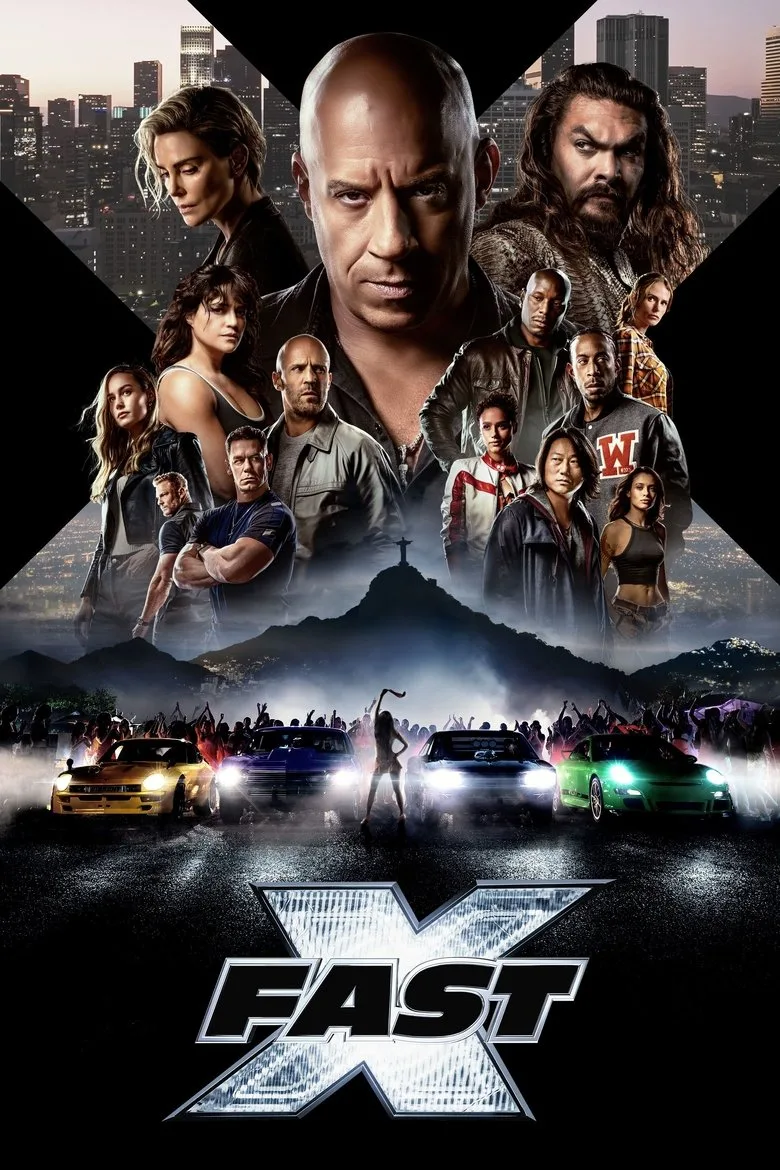
Fast X represents the franchise's most ambitious attempt at serious storytelling, yet it struggles with the weight of its own mythology. The film concludes not with resolution, but with escalation. Director Justin Lin crafts an ending that prioritizes setup over payoff, leaving audiences suspended in narrative limbo rather than satisfied closure.
Plot Summary
The film centers on Dante Reyes, the vengeful son of antagonist Hernan Reyes, who blames Dominic Toretto and his crew for his father's death. What begins as a personal vendetta transforms into something far more dangerous. Dante orchestrates an elaborate plan to destroy everything and everyone Dom loves, moving methodically through the crew's vulnerabilities.
The action sequences escalate predictably. We see impossible car chases. We witness deaths that feel inevitable given the franchise's tone-deaf approach to consequence. The family faces threats from multiple directions simultaneously. Each setpiece is designed to raise the stakes, though I noticed the script struggles to make these moments feel earned rather than obligatory.
Throughout the runtime, Dante proves to be a calculating villain. He's not interested in a fair fight. He targets families, uses manipulation, and exploits the crew's fundamental weakness: their emotional attachments to one another. This is actually the film's strongest thematic element, though it remains underdeveloped.
The Ending Explained
The final act doesn't conclude so much as it pauses. Dante successfully orchestrates a devastating attack that separates the crew and leaves them vulnerable. The climax occurs in a sprawling action sequence that lacks the clarity needed for genuine tension. Multiple characters are in mortal danger simultaneously, yet the editing style makes it difficult to understand spatial relationships or tactical positioning.
Dom faces Dante directly, but this confrontation is interrupted before reaching any meaningful resolution. The villain escapes rather than being defeated. In my view, this is the film's most significant creative choice, and it's also its greatest weakness. The ending prioritizes franchise continuation over emotional satisfaction.
What does happen is character-specific. Letty makes a choice that alters her relationship with Dom. Brian O'Conner appears in a cameo that feels obligatory rather than organic. The crew discovers that Dante has resources they underestimated. The final moments reveal that the villain has orchestrated events on a scale larger than previously understood.
Several characters end the film in compromised positions. Some face capture. Others face death. The film refuses to clarify the status of multiple cast members, leaving viewers in genuine uncertainty about who survived and who didn't. I found this frustrating rather than intriguing. Ambiguity works only when it serves thematic purpose. Here, it simply feels like narrative stalling.
The ending positions Dante as a patient, intelligent adversary. He's willing to play a longer game than Dom anticipated. The villain demonstrates that raw speed and mechanical ingenuity cannot overcome systematic planning and emotional manipulation.
The Deeper Meaning
Beneath the surface, the ending suggests something the franchise has always struggled to articulate clearly: family is both strength and weakness. Dom's crew succeeds because of their bonds. They also fail because those same bonds can be exploited.
Dante represents consequence. He's the personification of Dom's past returning with legitimate grievance. The franchise has long avoided serious accounting for the collateral damage caused by the crew's actions. This film makes a modest attempt at that reckoning, though it handles the concept clumsily.
The ending also reflects franchise fatigue. After multiple world-ending threats, after impossible physics and absurd scale, the filmmakers recognize that traditional villains feel small. So Dante is patient. He's methodical. He's willing to let the crew tire themselves out before striking. This actually works as commentary on the franchise itself, though I suspect it's accidental rather than intentional.
In terms of character arcs, most crew members end the film in holding patterns. Their development is suspended. This is clearly intentional setup for a tenth installment, but it means this film functions primarily as bridge rather than standalone story.
Our Take
Fast X ends with promise rather than payoff. The film suggests that future installments might deliver more interesting storytelling by introducing a villain who cannot be defeated through the crew's traditional methods. Whether that promise will be fulfilled remains uncertain.
I believe the ending is simultaneously the film's most honest moment and its greatest failure. It refuses the easy catharsis of villain defeat. It refuses to restore status quo. It insists on consequences. Yet it does all this while positioning the actual confrontation for the next film, making this conclusion feel incomplete.
The rating of 6.998/10 seems appropriate. The film has moments of genuine entertainment value. The action choreography displays technical skill. The cast continues to demonstrate chemistry despite the increasingly ridiculous circumstances. However, the ending's refusal to resolve anything leaves viewers with a hollow feeling rather than satisfaction.
Fast X ends as a transitional installment in an aging franchise. It's competent. It's expensive. It's unwilling to take real risks with its established formula. The ending reflects all of these qualities simultaneously.
Note: This article is based on available information about the film.