

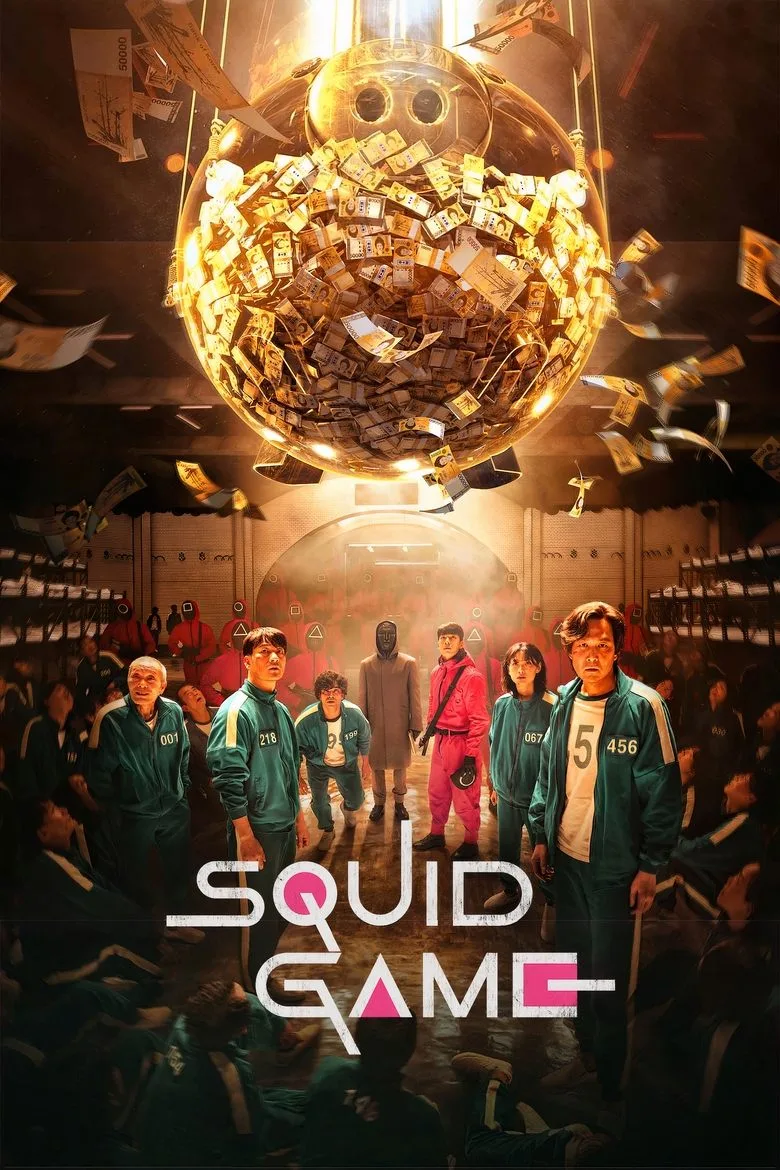
When it comes to survival and cutthroat competition films, Squid Game has earned a prominent place in the hearts of drama and thriller enthusiasts. But is it truly the best in its category? Today we embark on a comprehensive comparative journey between this South Korean masterpiece and another giant from the same genre: "The Hunger Games," which shares many narrative and dramatic elements with it.
About Both Films
In a world drowning under the weight of debt and poverty, a mysterious invitation reaches hundreds of desperate people. Squid Game is not merely an innocent competition, but a nightmarish journey through childhood games that transform into arenas of death. The series revolves around multiple characters from different social backgrounds who find themselves trapped in a secret location, where victory means money and life, and defeat means slow death.
For its part, "The Hunger Games" presents a similarly dystopian world where youth from various districts are forced to compete in deadly games broadcast live on television. The story centers on Katniss Everdeen, a girl who volunteers herself to save her younger sister from this dire fate. The film relies on a critique of the political and class systems from the very beginning.
Story and Narrative Comparison
Squid Game excels in its ability to build tension gradually, with each game revealing a new layer of horror and human cunning. The story focuses on the internal conflict between characters and how their nature changes under extreme pressure. The series uses elements of folklore and traditional games to create a bridge between childhood innocence and the brutality of survival.
Meanwhile, "The Hunger Games" launches from a more explicitly political perspective. The ruling system (the Capitol) uses these games as a tool of oppression and power display. The narrative focuses on revolution and resistance, presenting a bold protagonist who directly challenges the system. The story develops across four films, giving it greater space for personal and political development.
Acting Performance Comparison
| Criterion | Squid Game | The Hunger Games |
|---|---|---|
| Psychological Depth | Very strong, deep introspection | Strong, but more focused on action |
| Character Diversity | Multi-layered, focused on the individual | Balanced between individual and collective movement |
| Emotional Performance | Frustrating, harsh, and realistic | Passionate, inspiring, and revolutionary |
| Personal Development | Limited due to sudden death | Sequential and gradual across the series |
| Actor Interaction | Natural, raw, and authentic | Balanced and cinematic |
Squid Game features a cast of talented Korean actors who succeed in conveying complex psychological states. Lee Jung-jae delivers a sorrowful and quiet performance that reflects the compound despair of the main character. Each actor carries with them a story of bitter life that shows through their glances and slow movements.
On the other hand, Jennifer Lawrence in "The Hunger Games" delivers an active and decisive performance. She possesses the ability to embody doubt and determination simultaneously. The film relies on the dynamics of movement and rapid dialogue rather than suggestive silence.
Direction and Aesthetics Comparison
Korean director Hwang Dong-hyuk proves his mastery in using editing and soundtrack to create unsettling atmospheres. The colors are governed by cold gradations, and the lighting is often harsh and direct. The camera moves carefully, focusing on small details that reveal the psychological state of the characters.
The soundtrack is simple yet highly effective, using silence at times to deepen the sense of isolation and fear. Each game is presented with elegance, and the transitions between them are smooth and natural without exaggeration.
The director of "The Hunger Games," Gary Ross, chooses a more dynamic and movement-oriented style. The colors are more vibrant, and the lighting is more balanced between darkness and light. The camera uses rapid movement and sharp cuts to create a fast pace. The orchestral soundtrack is inspiring, pushing the viewer toward feelings of hope and movement.
Who Should Watch Each Film?
Squid Game is suitable for:
- Those who prefer deep psychological drama over superficial action
- Lovers of films that challenge social systems through realism
- Those seeking bleak and unexpected endings
- Enthusiasts of Asian cinema and non-English works
- Those who want to feel disturbed and anxious, not inspired
"The Hunger Games" is suitable for:
- Teenagers and young adults seeking a story of a strong protagonist
- Lovers of action, adventure, and thriller films
- Those who prefer clear political narrative and resistance against injustice
- Enthusiasts of films that offer hope and a constructive message
- Those who want a complete series with gradual development
Final Verdict
The choice between Squid Game and "The Hunger Games" depends on your personal preferences as a viewer. Squid Game offers a more realistic and brutal experience. It leaves you with a sense of unease even after you finish watching. The story focuses on humanity and our weakness in facing systems that don't account for our lives. The acting is raw and authentic, and the direction is meticulous in every detail.
"The Hunger Games," for its part, offers a more traditional cinematic experience. It balances excitement and political message more smoothly. The film has the power to convey a message of hope and change, giving you the feeling that resistance has meaning. The cinematic sequence of four films gives viewers a greater opportunity for emotional attachment to the characters.
If you're looking for cinema that challenges reality and the human soul without mercy, Squid Game is the choice. But if you want balanced cinematic entertainment with a powerful message, "The Hunger Games" is the best. Both works deserve to be watched, but for entirely different reasons.
📝 This article is editorial, built on publicly available information about the film. The author's opinions do not necessarily represent the platform's position, and details may differ from official sources.