

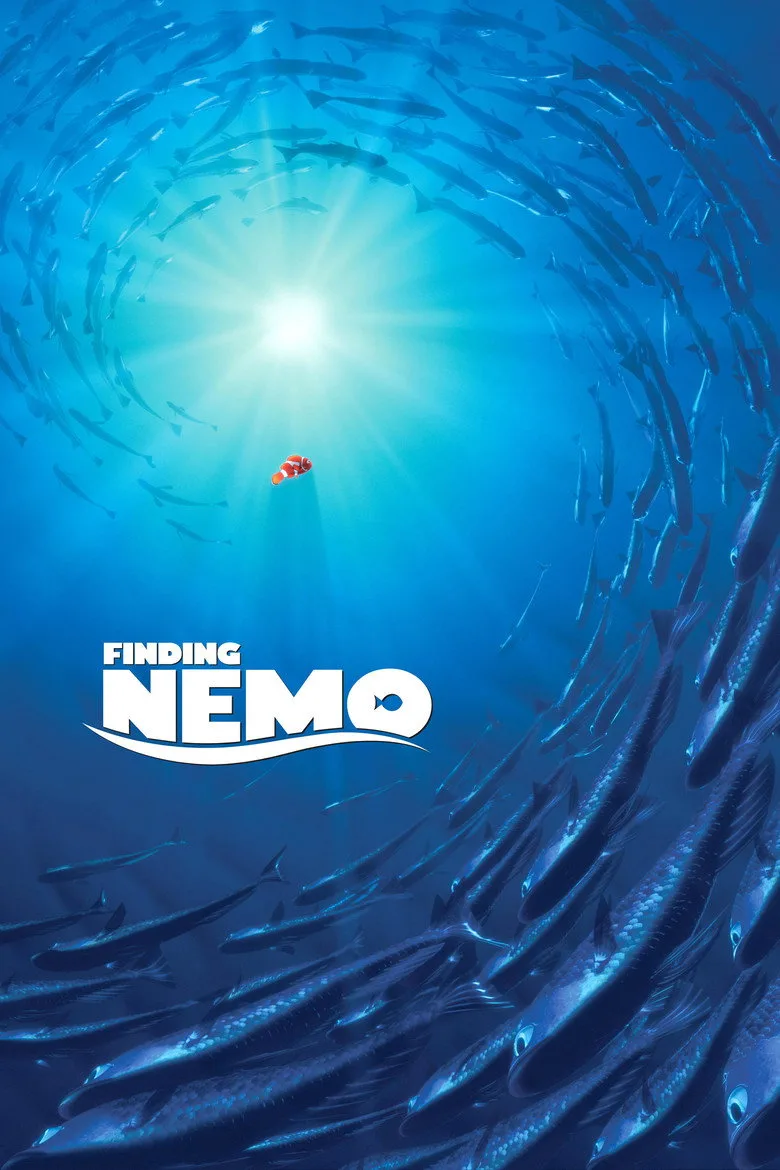
Finding Nemo is considered one of the most important family films ever produced by Pixar Studios, and it achieved unprecedented commercial and critical success since its release in 2003. But this success did not come out of nowhere; it came at a time when the animation industry was experiencing a genuine renaissance. Among the films that deserve comparison with it stands "Tangled" (2010) from Walt Disney Productions, a work that shares many dramatic and entertainment elements with it despite differences in setting and narrative style.
Overview of the Two Films
Finding Nemo follows Marlin, an anxious clownfish who loses his young son Nemo after a painful incident at the film's opening. Marlin sets out accompanied by Dory, a blue fish suffering from short-term memory loss, on a search journey across a vast ocean filled with dangers and strange characters. Meanwhile, Nemo attempts to escape from a Sydney dentist's aquarium along with a group of other fish. The film blends comedy and emotion in a balanced and sensitive manner.
Tangled, on the other hand, tells the story of Rapunzel, a young girl who spent her entire life inside a distant tower, deprived of seeing the outside world. When Flynn, a cunning thief, reaches her, she decides to escape with him to explore the kingdom and search for her real parents. The film is based on the classic Rapunzel legend but in a modern and witty version, with a focus on independence and liberation.
Quick Comparison Table
| Criterion | Finding Nemo (2003) | Tangled (2010) |
|---|---|---|
| Animation Type | 3D Animation | 3D Animation |
| Production Studio | Pixar | Walt Disney |
| Family Type | Father and Son | Mother and Daughter (Conflict) |
| Main Dramatic Arc | Search and Reunion | Independence and Discovery |
| Film Duration | 100 minutes | 101 minutes |
| Target Age Group | 3-12 years and parents | 4-14 years and parents |
| IMDb Rating | 7.8/10 | 7.7/10 |
Story and Screenplay Comparison
The narrative structure differs fundamentally between the two films. Finding Nemo employs a parallel narrative; half the film follows Marlin and Dory on their journey, while the other half follows Nemo in his escape attempts. This approach allows the viewer to experience the struggle from both sides of the story, creating balanced tension and drama. The story is simple but emotionally profound; it is a story of pure paternal love.
In contrast, Tangled moves in a single cohesive narrative line. Everything revolves around Rapunzel and Flynn, their shared development and the relationship that forms between them. The screenplay is more complex because it deals with issues of betrayal, truth, and identity. The film gradually reveals secrets from the protagonist's past, adding layers of psychological complexity. Both films contain elements of surprise, but the way they employ them is entirely different.
In terms of lessons learned, Finding Nemo focuses on courage, sacrifice, and trust, while Tangled emphasizes independence, free choice, and discovering the truth. Both messages are important for children, but they speak to slightly different levels of maturity.
Voice Acting and Performance Comparison
The voice acting in Finding Nemo carries a distinctive signature. Albert Brooks as a voice actor portrays Marlin with tenderness and realistic anxiety; his voice trembles with fear and emotion in sensitive moments. Ellen DeGeneres as Dory delivers a light and witty performance, compensating for her constant forgetfulness with her vitality and optimism. The duo creates wonderful vocal chemistry that makes the viewer accept the difference between the two characters.
In Tangled, Mandy Moore portrays Rapunzel with a performance overflowing with innocence, enthusiasm, and gradual development. Her voice reflects her character's growth from a controlled girl to an independent woman. Zachary Levi as Flynn delivers an endearing comedic performance with touches of deep drama. The relationship between them builds through dialogue and vocal interactions in a natural and engaging manner.
The difference here is that Finding Nemo focuses on being both witty and moving, while Tangled emphasizes the personal growth and emotional development of its characters. Both are strong but in different ways.
Direction and Animation Comparison
Andrew Stanton, director of Finding Nemo, was pioneering in using 3D animation techniques to create a beautiful and believable underwater world. The aquatic colors, water movement, natural behavior of fish — all of this was built with great care. The marine landscapes vary between colorful coral reefs, dark depths, and caves, giving the film a sense of continuous exploration.
Nathan Greno and Tanana Montano, directors of Tangled, benefited from the technical advancement that occurred between 2003 and 2010. The animation is more detailed, movements are more fluid, and colors are more vibrant. The tower, the kingdom, and the forests — each environment has its own visual identity. The use of Rapunzel's long hair as a moving visual element requires very advanced animation techniques.
In terms of cinematic direction, Finding Nemo is more realistic in its approach, with camera work that mimics real underwater cinematography. Tangled is bolder in its visual choices; for example, using hair as both a decorative and narrative element simultaneously. Both deserve praise for their commitment to advancing the medium.
Which Film Is Right for You?
Finding Nemo is particularly suitable for younger children (from age 3 onwards) and parents seeking a quiet and emotional cinematic experience. The film contains no real violence (although the opening is painful), and no excessively frightening material. It is also suitable for parents who want a story that addresses their fears about their children and their desire to protect them.
Tangled is more suitable for slightly older children (from age 6 onwards), teenagers, and adults. The film addresses more mature themes: independence, rebellion against authority, betrayal, and identity. Girls in particular may find in Rapunzel a character worth identifying with more than Marlin or Nemo. Additionally, the film contains more dramatically intense scenes.
If you have a very young child and want a quiet family film, choose Finding Nemo. If you have older children and want a more complex and energetic film, choose Tangled.
Final Verdict
Each film stands on its own ground and achieves its goals successfully. Finding Nemo is a declaration of love directed at mothers and fathers, a story about worry, courage, and fear for those we love. It is a film that touches the heart directly and reminds us of the importance of perseverance even when things seem impossible.
Tangled, on its part, is a story about freedom, personal choices, and self-discovery. It is a film that encourages viewers to question, explore, and trust their instincts. The music, dance, and movement in Tangled add an additional artistic dimension.
If we want a direct comparison: Finding Nemo is more perfect in terms of simplicity and emotional clarity, while Tangled is more ambitious in terms of narrative complexity and technical animation. Both deserve to be watched, and both have left a clear mark on the animation industry.
The final rating depends on your personal preferences. Do you want pure emotion? Choose Finding Nemo. Do you want a blend of entertainment and drama with a dose of music and movement? Choose Tangled. Actually, you don't need to choose — good films deserve to be watched all of them.
📝 This article is editorial content based on publicly available information about the film. The writer's opinions do not necessarily represent the platform's position, and details may differ from official sources.