

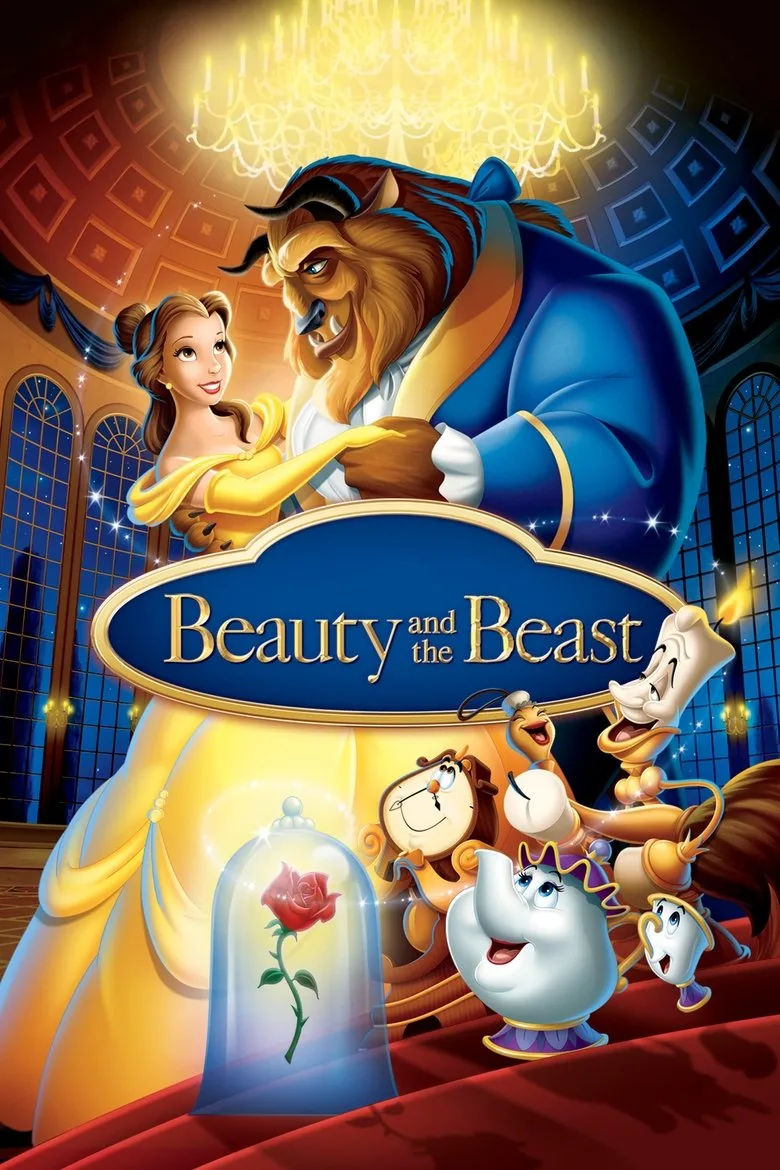
Comparison Between Beauty and the Beast and the Strongest Works in the Genre — Which is Better?
Beauty and the Beast is considered one of the most prominent animated films that achieved worldwide success and deserved the appreciation of both critics and audiences alike. However, the world of romantic family films is rich with other works worthy of attention. In this article, we will compare "Beauty and the Beast" (1991) with the film "Cinderella" (1950), that timeless classic which shares many narrative and artistic elements with it, and deserves to be a focal point for critical dialogue.
Overview of Both Films
"Beauty and the Beast" presents a reimagined version of the classic French fairy tale, directed by Gary Trousdale and Kirk Wise. The film revolves around a girl named Belle who lives a modest life with her father, only to find herself trapped in an enchanted castle with a cursed beast. Through a relationship that develops between the two characters, Belle discovers that true love transcends outward appearance and reaches the essence of the soul.
For its part, "Cinderella" (1950), directed by Clyde Geronimi, is a masterpiece from the golden age of animation. The story tells of an orphaned girl who suffers persecution from her stepmother and stepsisters, but her dream of attending the royal ball comes true with the help of her fairy godmother, and there she meets the man of her dreams.
| Criterion | Beauty and the Beast (1991) | Cinderella (1950) |
|---|---|---|
| Release Year | 1991 | 1950 |
| Director | Gary Trousdale and Kirk Wise | Clyde Geronimi |
| Rating (IMDb) | 7.7/10 | 7.3/10 |
| Genre | Romance, Family, Fantasy | Romance, Family, Comedy |
| Core Message | True beauty lies in the soul, not appearance | Love and kindness triumph over injustice |
| Target Audience | Children, families, and teenagers | Children and families |
Story Comparison
Both films are based on classic fairy tales, but differ notably in narrative structure. In "Beauty and the Beast," the protagonist participates in solving the problem effectively and actively. She is the one who makes the brave decision to sacrifice herself for her father, and she is the one who gradually discovers the kind heart behind the terrifying mask. This gives her an active, positive role in the narrative.
"Cinderella," on the other hand, presents a relatively more passive character. Cinderella suffers patiently and waits for help from outside (the fairy godmother), and the main event (the royal ball) happens thanks to external magical intervention. Her life changes based on a decision made by someone else, though the girl deserves this transformation because of her kindness and patience.
In terms of dramatic development, "Beauty and the Beast" presents more clearly defined turning points, with love growing between the characters through a series of scenes of increasing intimacy. Meanwhile, "Cinderella" relies on the concept of love at first sight, which is more traditional in terms of romance.
Performance Comparison
Voice acting plays a central role in animated films, and both films carefully selected their voice actors. In "Beauty and the Beast," Paige O'Hara provides a warm and intellectual voice for the character of Belle, reflecting her independence and inner strength. Jerry Orbach's voice as "Lumiere" adds both comedic and nostalgic layers simultaneously.
In "Cinderella," Ilene Woods provides a soft and dreamy voice befitting the character of Cinderella. The voice of Prince Charming and the voices of the good fairy and the wicked stepsisters all contribute to creating a balanced dramatic atmosphere.
The noticeable difference is that "Beauty and the Beast" (1991) benefited from relatively advanced voice acting techniques, which allowed for more precise and varied expressions, whereas "Cinderella" (1950), despite its excellence, was limited by the technical capabilities of that era.
Direction Comparison
"Beauty and the Beast" represents a turning point in the history of animation. Directors Gary Trousdale and Kirk Wise used advanced techniques for the era, including the integration of traditional animation with computer graphics in certain scenes (particularly the "Tale As Old As Time" dance). This gave the film a visual depth and kinetic dynamism that had not existed before.
The direction in "Beauty and the Beast" is characterized by boldness in the use of angles and camera movement. The dramatic scenes are edited with precision, and the narrative pace is fast enough to maintain interest without being annoyingly rushed.
"Cinderella" (1950), for its part, reflects a purely classical style. The direction is more straightforward and less experimental, but it enjoys artistic purity and deliberate simplicity. Every frame is carefully designed, and movements are calculated with precision. Cinderella's dance with the Prince, though more traditional, carries a distinctive poetic beauty.
In terms of color use, "Beauty and the Beast" employs a more dramatic and rich color palette, especially in nighttime scenes and the enchanted castle. "Cinderella" uses brighter and more vibrant colors, reflecting magic and fantasy in a lighter manner.
Which Film Is Right for You?
"Beauty and the Beast" (1991) is particularly suited for teenage girls and young women who seek romantic stories with deeper layers. The film presents a model of an independent heroine who thinks with her mind, loves reading and knowledge, and values a person based on how they treat her rather than their appearance. It is also suitable for families seeking intellectually stimulating content that engages the mind.
"Cinderella" (1950) is suitable for young children and families seeking to enjoy a pure and lighthearted fairy tale. The film is ideal for those who love classics and traditional stories without additional intellectual complexities.
Final Verdict
Both films deserve their places in the history of animation. However, in terms of cultural impact, narrative depth, and technical innovation, "Beauty and the Beast" (1991) clearly excels. The film was not merely a revival of an old story, but a true turning point in the industry. It employed new techniques, presented a more complex and realistic heroine, and built a developing love story rather than love at first sight.
"Cinderella" (1950) remains an invaluable classical artistic legacy and retains its own special magic, but it belongs to a different era of animation. If you had to choose one to watch now, in the age of modern cinematic expectations, "Beauty and the Beast" (1991) offers a richer and more satisfying experience on multiple levels.
📝 This article is editorial content based on publicly available information about the film. The author's opinions do not necessarily represent the platform's position, and details may differ from official sources.