

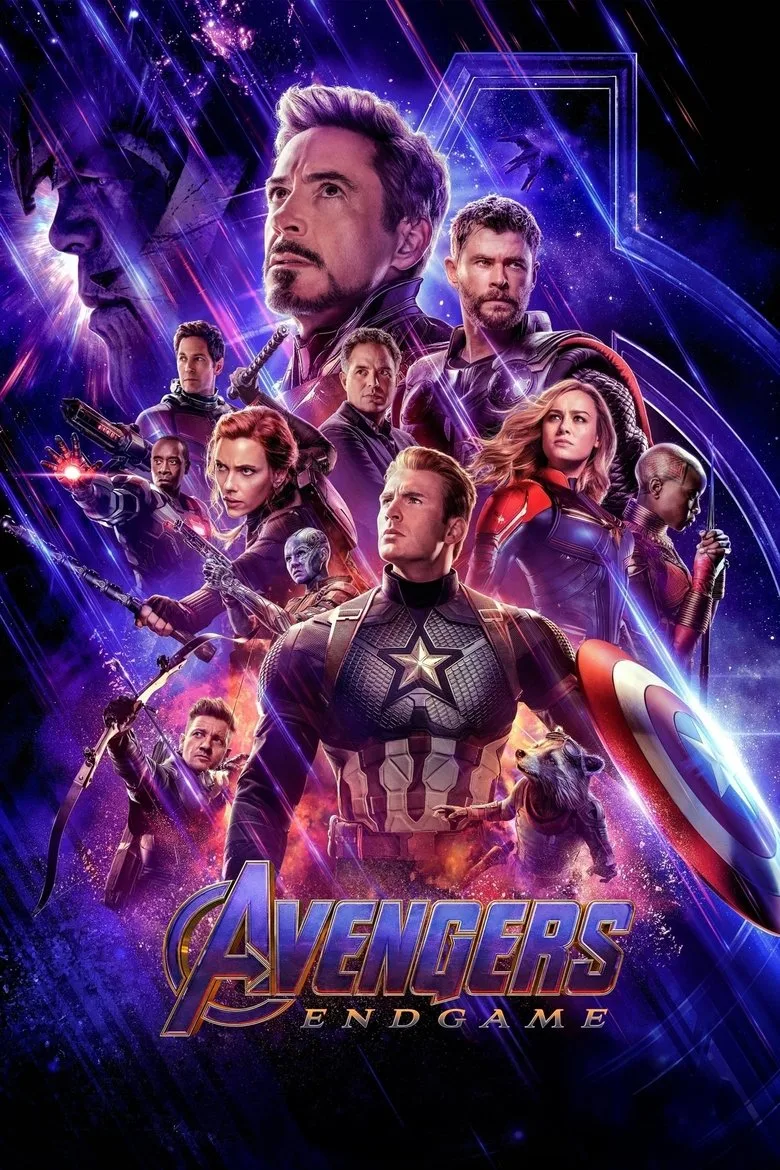
Avengers: Endgame vs Infinity War
Comparing Avengers: Endgame with Avengers: Infinity War is not just about which movie is bigger or more popular. The two films complete each other, but they succeed in very different ways. Infinity War builds pressure around Thanos and his mission until the heroes fall. Endgame turns that defeat into a long emotional farewell to an entire era of Marvel storytelling.
So the better question is not simply which one is larger. It is which one works better as cinema, and which one leaves the stronger emotional mark. That is where the comparison becomes interesting: one film is tighter and more focused, while the other carries a cultural and emotional weight few blockbusters can match.
Story and Structure
Infinity War has the clearer narrative engine. Thanos sits at the center of the story, and his search for the Infinity Stones gives the film a strong dramatic spine. Even with a huge cast, every storyline pushes toward the same disaster, and every battle brings the villain closer to his goal.
Endgame works differently. Its first stretch is built around grief, failure, and the emotional aftermath of the snap. That gives the film depth, but it also slows the rhythm and makes the story more dependent on the viewer’s history with the characters. The time-travel plot adds fun and nostalgia, yet it also creates logical questions the movie does not always try to close neatly.
Thanos or the Heroes?
In Infinity War, Thanos is the dramatic center of gravity. His threat comes not only from power, but from his frightening belief that he is right. The film does not justify his worldview, but it does give him enough dramatic presence for viewers to understand how he thinks while rejecting what he does.
Endgame, on the other hand, belongs to the heroes. Tony Stark, Steve Rogers, Natasha Romanoff, and Thor each receive moments of farewell, recovery, or self-confrontation. That makes the film less focused as a plot, but stronger as a closing chapter for characters audiences had followed for years.
Pacing and Direction
Anthony and Joe Russo direct both films, but the tone is very different. Infinity War moves quickly between space, Earth, Wakanda, and Titan without losing its sense of danger. It feels like a race against an outcome that may already be unavoidable.
Endgame begins more quietly and gradually turns into a large-scale celebration of Marvel history. That choice supports the farewell, but it also makes the film less disciplined in pacing. The final battle is huge and satisfying, but it works mainly because of years of buildup, not because it is only an action sequence on its own.
Performances and Characters
Endgame gives Robert Downey Jr. one of his strongest turns as Tony Stark, and it gives Chris Evans a quiet ending that fits Steve Rogers beautifully. Scarlett Johansson, Mark Ruffalo, and Chris Hemsworth also get meaningful moments, even if some character arcs land better than others.
In Infinity War, Josh Brolin’s Thanos remains one of the film’s greatest strengths. His performance gives the character weight, grief, and brutality at the same time. Some heroes receive less room because the cast is so crowded, but that crowding also supports the feeling that the entire universe is moving toward one impossible moment.
Emotional and Cultural Impact
If the measure is shock and boldness, Infinity War has the advantage. Its ending leaves the audience inside a rare kind of defeat for a massive superhero movie. Letting the villain win so completely was a bold choice that still gives the film its sharpest edge.
If the measure is farewell and long-term attachment, Endgame is hard to beat. It does not work only as a standalone movie; it works as the payoff to more than a decade of audience investment. Its biggest moments are powerful because viewers bring years of memory into them.
Quick Comparison
A major emotional conclusion to years of Marvel storytelling, especially for Tony Stark and Steve Rogers.
A tighter story with a clearer goal, sharper pacing, and Thanos placed directly at the center of the conflict.
Which One Is Better?
From a pure storytelling perspective, Infinity War feels more controlled. It has a clear goal, a powerful villain, sharp momentum, and a bold ending that allows defeat to land. It knows where it is going from the beginning.
Endgame is the more important emotional and cultural event. It is not always the cleaner screenplay, but it succeeds as a collective farewell to characters audiences had grown up with. In that sense, Infinity War is the stronger film structurally, while Endgame is the more meaningful experience for viewers deeply invested in the Marvel journey.
Final Verdict
The winner depends on what you value most. If you want tighter pacing, stronger tension, and a braver ending, Infinity War comes out ahead. If you want a major emotional farewell to the Marvel era, Endgame remains essential. Together, the two films operate almost like one story: the first breaks the world, and the second tries to repair it at a heavy emotional cost.
This article is an editorial comparison based on both films and their place within superhero cinema. The final preference may vary depending on each viewer’s attachment to the Marvel characters.