

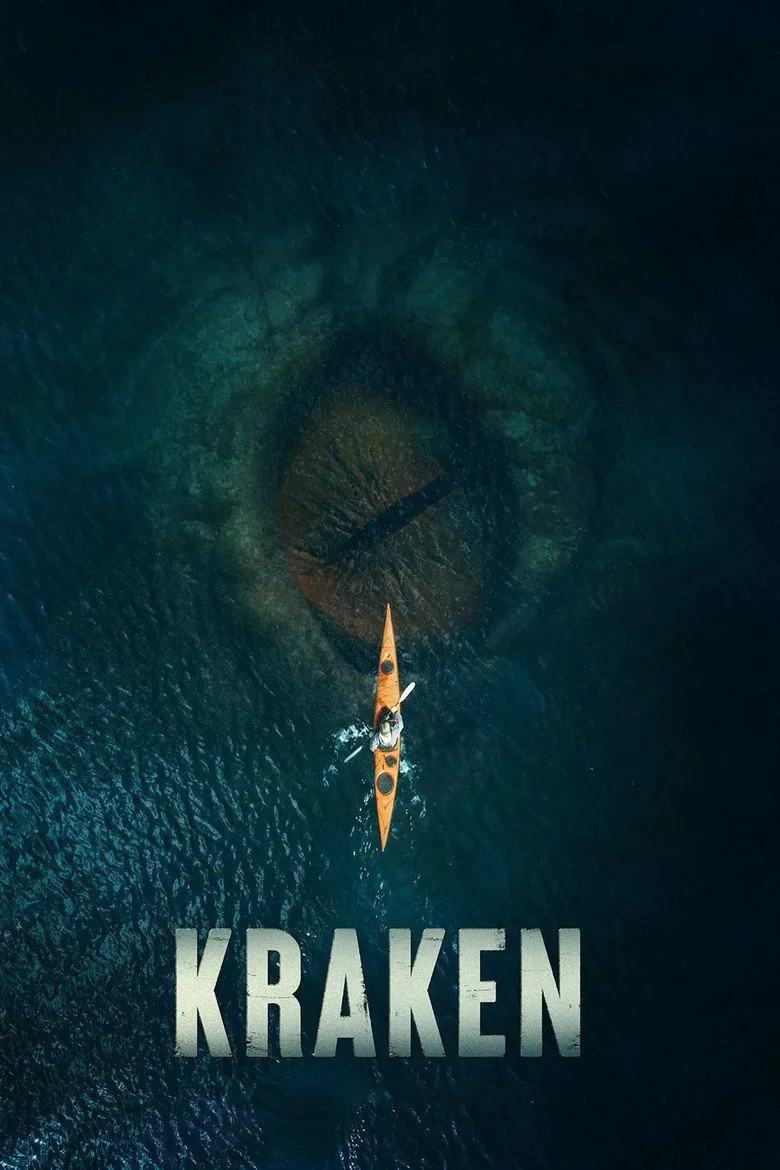
Introduction: When Calm Becomes a Prelude to Terror
At a time when creature features race toward visual spectacle at the expense of dramatic depth, Kraken raises a different question: what if the monster is not the real problem? What if the deeper terror lies in our human inability to acknowledge that there are boundaries we should never cross? Set in an isolated Norwegian fjord, the film borrows the visual aesthetics of Northern Europe to build upon them a quietly concealed philosophical argument about humanity's relationship with what it cannot classify or control. ---The Central Idea: Science Confronting the Irrational
The film rests on a fundamental tension that is never stated outright, yet runs through every scene: the conflict between the empirical scientific method and what lies beyond the reach of classification and measurement. The protagonist, a marine biologist, represents the classic model of rationality armed with its tools — measuring instruments, data, testable hypotheses. Yet the film places her before a phenomenon against which all her conceptual tools collapse, not necessarily because the phenomenon is supernatural, but because her frame of reference is far too narrow to contain what she faces. This equation carries within it an ancient philosophical heritage stretching from Kant and his distinction between phenomenon and the thing-in-itself, to Husserl and his phenomenology, and on to a modern paradox: the more our scientific knowledge of the oceans expands, the more we discover that what humanity does not know about their depths vastly exceeds what it does. The Kraken, as a mythological creature deeply rooted in Scandinavian tradition, is presented here not merely as an external threat, but as an embodiment of everything the modern rational mind has refused to acknowledge. ---Character Analysis: Symbolic Roles More Than Human Ones
The Marine Biologist: The Epistemic Self and Its Crisis The central character is not simply a hero facing a sea monster; she is a moving metaphor for the modern Western mind in crisis. She begins from a position of epistemic authority — she is the one who diagnoses, who analyzes, who passes judgment on what is happening. But the film dismantles her slowly and precisely, stripping away one tool after another, until she finds herself confronting something that has no name in her scientific lexicon. What sets this character apart from the usual archetypes in horror films is that she does not collapse emotionally in the clichéd way. Her breakdown is quieter and cuts far deeper: it is the collapse of an entire cognitive model, not merely a frightened person. This distinction grants the film a psychological depth that goes well beyond what its written dialogue alone provides. The Local Inhabitants: The Memory of Place Against Modernity The secondary characters belonging to the rural community surrounding the fish farm carry a dual narrative function. On one hand, they represent an oral tradition that holds within it a wisdom accumulated across generations of life on the edge of the sea. On the other hand, they embody the class and cultural tension between a community living in a pre-modern relationship with nature and a modern economic institution — the fish farm — that sees the ocean as nothing more than an investment resource. This class dimension never dominates the surface, but it is clearly present in the background, lending the conflict additional layers well beyond the straightforward binary of human versus monster. ---Symbols and Meanings: The Geography of Fear
The Fjord: The Boundary as a Philosophical Concept The choice of a fjord as the setting is not merely an aesthetic decision. By its very geographical nature, the fjord is a borderland par excellence: it is neither open sea nor dry land, but a transitional space suspended between two worlds. This description maps perfectly onto the state the characters inhabit throughout the film — suspended between what can be explained and what cannot, between myth and science, between the safety of home and inevitable drowning. The towering rock walls enclosing the fjord read visually not as protection but as confinement. The human figure within this landscape is not sheltered; it is trapped in something beautiful. The Fish Farm: Capitalism and the Exhausted Natural World The isolated fish farm carries a clear symbolic meaning for those who choose to read it: it is a concentrated model of the extractive relationship the modern human has established with the marine environment. Output metrics, figures, schedules — all of it subjects the ocean to an economic logic that never asks about the environmental cost. In this context, the Kraken is not a mythological punishment in any literal sense, but it functions symbolically as nature's response to what is being done to it. This places the film within a much broader conversation about the climate crisis and the consequences of human expansion into fragile ecosystems. The Underwater Darkness: The Collective Unconscious There is a recurring visual language in the film centered on what lies beneath the surface: a camera that slides toward darkened depths, waters that swallow light, shapes that writhe without ever becoming clear. This language directly invokes Jung's concept of the collective unconscious — all the primal fears and ancient memories that humanity has buried wait in the depths, requiring only the slightest disturbance to rise back toward the surface. In this sense, the Kraken is a metaphor for the repressed dimensions of human experience that no amount of denial can keep down. ---The Hidden Message: What the Film Does Not Say Aloud
The film refuses the easy, comfortable answer. By its end, science has not triumphed completely, and myth has not been definitively defeated. This carefully managed ambiguity carries, in my view, the deepest message the film wishes to convey: that there are things in this world that resist the closed endings the modern human finds reassuring. Learning to live with ambiguity, and acknowledging the limits of human knowledge, is not weakness but philosophical and intellectual maturity. There is also a subtle feminist dimension in the film that deserves mention: the female protagonist who challenges a male-dominated institution that denies what she reports, then dismisses what she witnesses because it conflicts with its economic interests, constitutes an implicit critique of the mechanisms by which cautionary voices are silenced in bureaucratic and economic contexts — whether those voices are female or environmental. ---Conclusion: A Monster Without Justifications
Kraken remains a film whose intellectual ambition exceeds the sum of its artistic execution, which may explain its middling reception — a score that reflects the gap between what the film sought to say and what it actually conveyed to its broader audience. Yet in its symbolic layers, the film offers genuine material for reflection for anyone willing to read horror films as cultural mirrors rather than mere fleeting emotional experiences. The Kraken was never simply a monster. In Scandinavian tradition, it was an embodiment of everything the sailor does not know about the waters he crosses. In this film, that meaning is reactivated in a contemporary context: we live in an age when what we do not know about our own planet is returning to us with consequences we never anticipated. Mythology, in the end, is not what survives from the past — it is what we refused to learn from it.📝 This article is an editorial piece based on publicly available information about the film. The author's opinions do not necessarily represent the platform's position, and details may differ from official sources.