

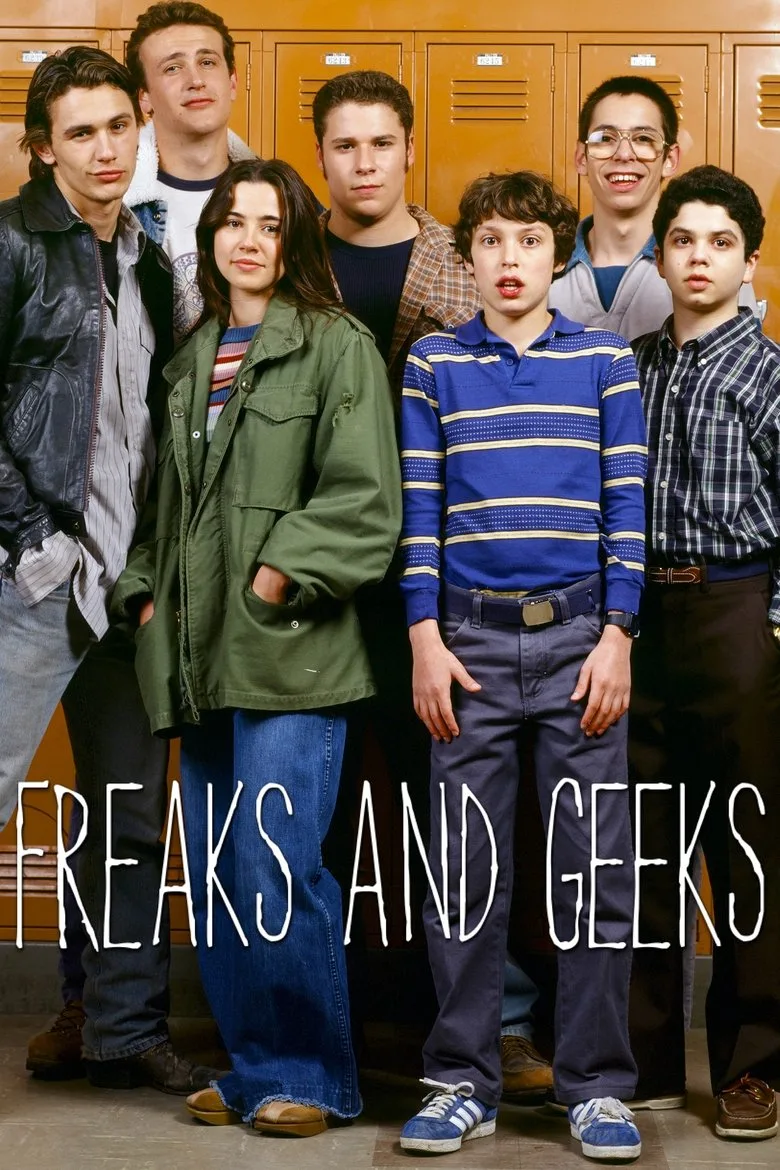
Analysis of Freaks and Geeks 1999 — Ideas, Symbols, and Meanings
Freaks and Geeks is considered one of the most honest television series in its portrayal of the transitional phase between childhood and maturity. Despite the fact that the series completed only one season before its cancellation, it left an indelible mark on popular culture and television drama. The work presented by Judd Apatow transcends the superficial narrative about a girl who leaves her social circles; it is a deep dive into questions of identity, belonging, and acceptance in a world that seems harsh and incomprehensible to young people.
The Central Idea: The Search for Self in a World That Rejects You
At the heart of the series lies a profound philosophical idea: what happens when you realize that the path society has chosen for you does not reflect who you truly are? Lindsay Weir represents this fundamental struggle that every teenager faces. She was successful, academically gifted, but this success was not her true choice so much as it was a reflection of her parents' and society's expectations. When she chooses to join the world of the freaks, she is not merely choosing a new social group; she is choosing her true self, even if this version of herself is less apparently acceptable.
This choice reflects a complex psychological reality: belonging to the wrong group is better than isolation within the right group. The freaks, with all their oddity and rebellion, give Lindsay something that the math star could not obtain: recognition of her as she truly is, without mask or pretense.
Analysis of Main Characters: Mirrors Reflecting Aspects of the Human Psyche
Lindsay Weir: The Rebel Searching for Freedom
Lindsay is not a simple or stereotypical character. Her journey is not a linear tale of a girl who stopped trying and became rebellious. Instead, the series presents a deeper truth: Lindsay discovers that her true version has been repressed all along. The rebellion is not a reaction against her parents, but rather an expression of a self composed of deeper doubts and questions about who she wants to be. Her love of music and alternative culture did not emerge suddenly; it was always there, constrained by social expectations.
The dark side of her character, her experience with drugs and abusive relationships, is not presented as moral punishment so much as it is presented as part of a learning process. Lindsay suffers from problems because she is trying to discover her limits and true worth, a process that is painful and complex by nature.
Sam Weir: Struggling with Masculine Identity
Lindsay's brother, Sam, wages a completely different yet equally important parallel battle. In a world that harshly dictates standards of masculinity, Sam tries to be himself: obsessed with films and books, nerdy, not athletic. He faces harsh rejection from his peers and expectations from his parents to be a "normal boy." In a way, Lindsay recognizes that he lives in a different prison than hers, but it is fundamentally the same prison: a world that rejects difference.
Sam's journey is not about outward rebellion, but about finding the courage to be a nerd in a world that mocks nerdiness. This, in a way, is harder than Lindsay's rebellion, because it requires a quieter kind of bravery.
The Parents: The Terror of Parenthood in a Changing World
Lindsay and Sam's parents represent a generation trying to understand their children in a world completely different from the one in which they grew up. The father represents confusion and fear, while the mother represents a genuine attempt to understand despite the generational gap. A glimpse into the parents' lives reveals a painful truth: parenthood is not about control or imposing your vision on your children, but about the constant fear of losing them and worry about their safety.
Symbols and Meanings: Reading Between the Lines
Music as a Language of Liberation
Music in the series is not ordinary background music; it is a language of dialogue between the characters and their inner worlds. Lindsay's choice of heavy and alternative music is not merely a musical preference, but a sonic reflection of her troubled spirit. The music of the time period (the 1970s and 1980s) forms a bridge between generations and represents a cultural revolution in the face of conformity.
Clothes and Appearance: Visible Identity
Lindsay's change in clothes and appearance symbolizes her inner transformation. The simple, sporty clothes she wears at the beginning represent visible submission to expectations, while gradually, she begins to wear clothes that express her true spirit. This transformation in appearance is not superficial; it is a political and personal statement about self-determination.
School as a Microcosm of Society
The school functions as a battlefield for larger social conflicts. The rigid social hierarchy and clearly defined categories represent a broader social system that punishes difference. The schoolyard, hallways, and classrooms become daily battlegrounds where young people must either conform or rebel.
The Hidden Message: The Cruelty of Lost Innocence
One of the deepest messages in the series is the exploration of the space between childhood innocence and the necessities of adult life. The series inhabits this strange space where young people are expected to choose their own path, yet they lack the tools and wisdom necessary to do so correctly. Lindsay uses drugs not because she is bad, but because she is trying to escape pain and confusion. Sam is bullied not because he deserved it, but because society raises harsh standards for acceptance.
The series does not judge its characters harshly; instead, it understands and empathizes with them. This is the essence of true human drama.
Belonging Versus Identity
The series poses a fundamental philosophical question: can you be your true self while belonging to a group? Or does belonging require sacrificing a part of yourself? The freaks accept Lindsay as she is, but this means she loses other things: academic security, family comfort, social stability. There is no easy answer, and this is what makes the series honest and harsh.
Conclusion: A Legacy That Transcends Its Brief Run
Although Freaks and Geeks lasted only one season, its impact extends far beyond this short timeframe. The series did not offer easy answers or magical endings. Instead, it offered a deep and human picture of youth in all its uncertainty, turmoil, and beauty. Lindsay, Sam, and their friends were not original prototypes of teenage characters; they were genuine reflections of the struggles and questions that every young person faces when trying to discover their place in the world.
What distinguishes this work is its refusal of simple moral judgment. The freaks are not ideal heroes, and the geeks are not victims deserving of unconditional pity. They are complex human beings fighting personal battles within a broader social context. This complexity, this refusal of simple divisions between good and evil, is what gives the series its lasting power.
In the end, Freaks and Geeks teaches us that the search for self is painful, messy, and does not end with a single click. But it is necessary. Because life does not present one correct version of the self you should be; instead, it presents different ways to explore who you truly are. This is the real lesson the series leaves with us.
📝 This article is editorial content based on publicly available information about the film. The author's opinions do not necessarily represent the platform's stance, and details may differ from official sources.